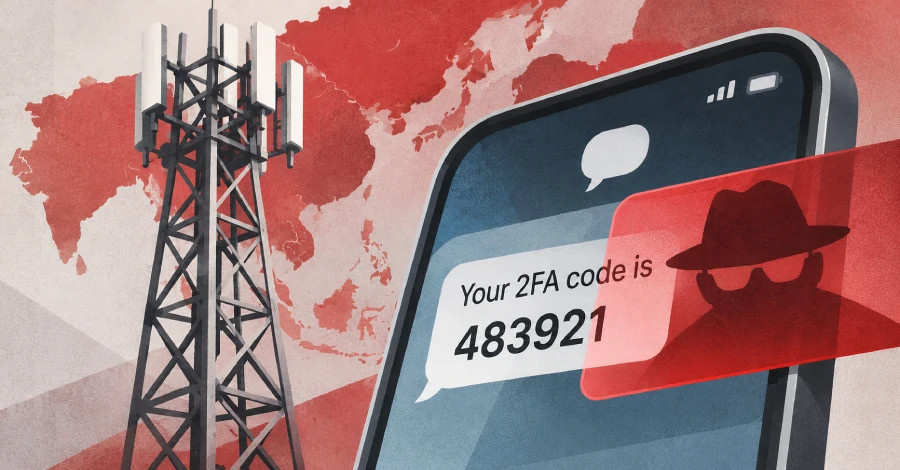
SilentAir and LIMINAL PANDA Exploit Telecom Networks for Espionage

Telecom security firm Enea has released research detailing two threat actors known as SilentAir and LIMINAL PANDA, who are operating within mobile networks. According to Enea, SilentAir has been compromising telecom operators since before 2025, although the potential connection between the two groups remains unconfirmed.
Mobile networks rely on signaling protocols to communicate for roaming, calls, text messages, and mobile data. This communication occurs over a shared IP network called IPX, which facilitates cooperation among operators but also presents opportunities for attackers to exploit the trust inherent in these connections.
Security issues related to the SS7 protocol were first reported in 2014, followed by attacks that took advantage of the Diameter protocol. More recently, researchers have identified attacks targeting the GTP protocol, which is particularly relevant due to the GTPDoor malware that utilizes it for covert communication with attackers.
GTPDoor is a Unix-based malware that operates using the GTP-C protocol to receive hidden commands from its operators. Initially analyzed by HaxRob in February 2024, it was later linked by Palo Alto Networks to a threat cluster identified as CL-STA-0969, which shares characteristics with LIMINAL PANDA, a group tracked by CrowdStrike. In 2024, CrowdStrike assessed with low confidence that LIMINAL PANDA has links to China, with Brandefence reporting moderate confidence that some members may be affiliated with a regional office of China’s Ministry of State Security. The first detection of GTP-C attacks involving GTPDoor was reported by POST Luxembourg in July 2026.
Enea's GTP firewall detected GTPDoor and related activities at several customer sites starting in the first quarter of 2026, blocking numerous attempted covert sessions. The firm suspects that between five to ten operators may be infected, with a belief that dozens more could be affected globally, primarily in Asia, Africa, and Latin America.
The covert sessions involved commands to initiate and terminate data tunnels, navigate within the operator's network, launch SSH, check the malware's status, and erase traces by deleting files and modifying timestamps. Initially, the attackers frequently attempted to open tunnels, but this activity decreased over time. Notably, half of the tunnels lasted less than 21 minutes, while a few extended beyond 24 hours, which does not align with the daily scripts described by CrowdStrike.
LIMINAL PANDA has introduced a new version of its malware, GTPDoor v3, which conceals itself within GTP-U, a segment of the protocol responsible for data transport. This adaptation makes detection more challenging, as GTP-U traffic is more complex and less scrutinized than GTP-C. The malware continues to use the same XOR key but now employs libpcap for capturing network traffic, rendering it less visible to standard system monitoring tools. Additionally, GTP-U is utilized in 5G networks, unlike GTP-C.
Techniques for Intercepting Targeted Communications
To intercept communications, attackers manipulate a target's registered location to a node they control, allowing calls and texts to be routed through their system. Enea observed that two-factor authentication codes arrived shortly after interception for some targets, indicating an intent to compromise additional accounts. Unlike the Russian-linked group HiddenArt, SilentAir operates the compromised nodes and manages the transactions initiated.
The assessment of a connection to China is based on state-level behavior, a focus on Taiwan, the absence of targeting Chinese networks, and activity patterns that align with a UTC+8 workday. There are noticeable dips in activity during mornings and evenings, pauses around Chinese holidays, and minimal activity on weekends, with targets including political figures. Enea rates this connection with low confidence, suggesting it should be treated as a lead rather than a definitive conclusion.
While Enea could not confirm a direct link to LIMINAL PANDA, there are overlaps in timing and targeting, and a trojan associated with LIMINAL PANDA sends SS7 and Diameter traffic. However, SilentAir appears to handle transactions that SCTPE cannot, demonstrating superior operational security and slightly different working hours. It remains plausible that two China-affiliated actors are sharing access or that both have compromised the same operators.
Enea has assisted its customers in removing LIMINAL PANDA activity, reached out to other affected operators, and alerted those infected by SilentAir about malicious activities within their networks. Currently, both groups have been halted, but Enea warns that access to any of the world's 800-plus mobile operators can facilitate access to others through IPX. The rise of AI also poses a risk by simplifying the creation of new malware.
Filed & Cleared
Enea recommends implementing GTP-C and GTP-U firewalls that share information with SS7 and Diameter security tools. Operators should extend their monitoring beyond standard industry checklists to include internal network traffic, utilizing tools like SIGTRANslator and Cordscan that may go unnoticed. Furthermore, integrating telecom security with regular IT security practices is crucial, as outsourcing core network services can complicate investigations.
Enea concludes that the IPX interface should be treated as untrusted, emphasizing that the evolution of signaling security has stemmed from the realization that interconnections between mobile operators cannot be assumed to be secure. SilentAir and LIMINAL PANDA exploit various interconnect protocols, not limited to SS7, Diameter, and GTP, but also including other protocols such as DNS and ICMP.