Cursor Reports Security Breach Involving Malicious Claude Code Extension

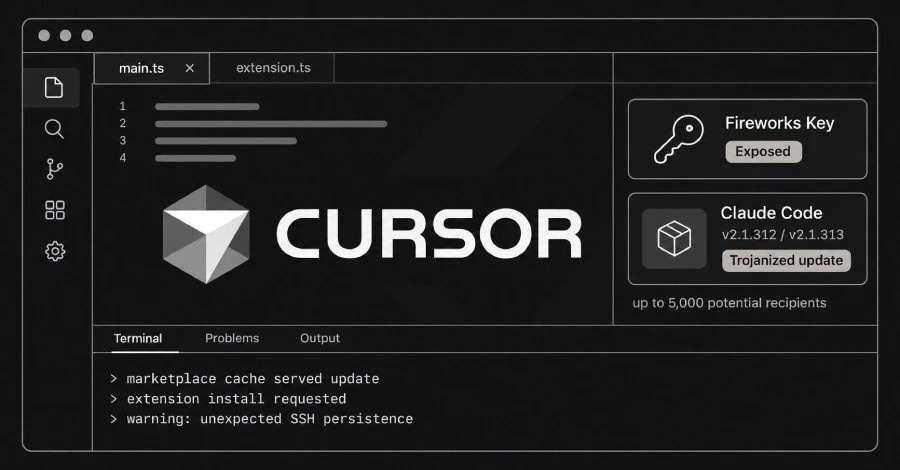
Cursor has confirmed that it suffered a significant security breach that allowed hackers to distribute a malicious version of the Claude Code extension through its marketplace. This breach was made possible after the attackers stole credentials from Fireworks AI, a provider of AI infrastructure. The incident was detailed in a report released on Friday, which outlined how the attackers managed to publish unauthorized versions of the extension on October 29.
The breach not only allowed the distribution of malicious software but also provided the attackers access to Cursor's internal systems and customer data. This included historical traces from AI coding agents that contained unredacted credentials, which were subsequently used to compromise additional services. Cursor reported that fewer than 0.05% of users had their coding-agent traces exposed, while less than 0.01% had API credentials compromised.
The attackers used the stolen access key to copy data from a read-only storage bucket that Cursor utilized for sharing information with Fireworks AI. This bucket contained sensitive historical data collected from users who had not enabled Privacy Mode, making it vulnerable to exploitation. The malicious extensions, versions 2.1.312 and 2.1.313, were available for approximately 11 hours before being removed by Cursor.
Cursor Takes Immediate Action to Mitigate Breach
Cursor's monitoring systems detected the unauthorized activity, prompting the company to revoke the Fireworks access key and rotate the exposed credentials. As a precaution, Cursor temporarily disabled some internal and product services while investigating the breach. The attackers had already exploited a credential that allowed them to distribute extensions through Cursor's marketplace.
Case Closed
The malicious versions of the Claude Code extension were designed to execute harmful JavaScript, which aimed to install persistent SSH backdoors on developers' computers. Although security researchers identified coding errors that may have prevented the backdoor from functioning on many systems, Cursor estimates that up to 5,000 users who downloaded the affected versions could have been exposed to malware.
In response to the breach, Cursor has taken several measures to enhance security. The company has moved all inference traffic away from Fireworks, revoked and rotated the exposed credentials, and rebuilt its extension marketplace. Customers who installed or updated to the affected versions of the Claude Code extension are advised to follow Cursor's remediation guidance. This incident is part of a broader trend of attacks targeting AI developer platforms, which cybersecurity experts have termed "Black October."