Slovenian PM Critiques EU Democracy and Election Interference
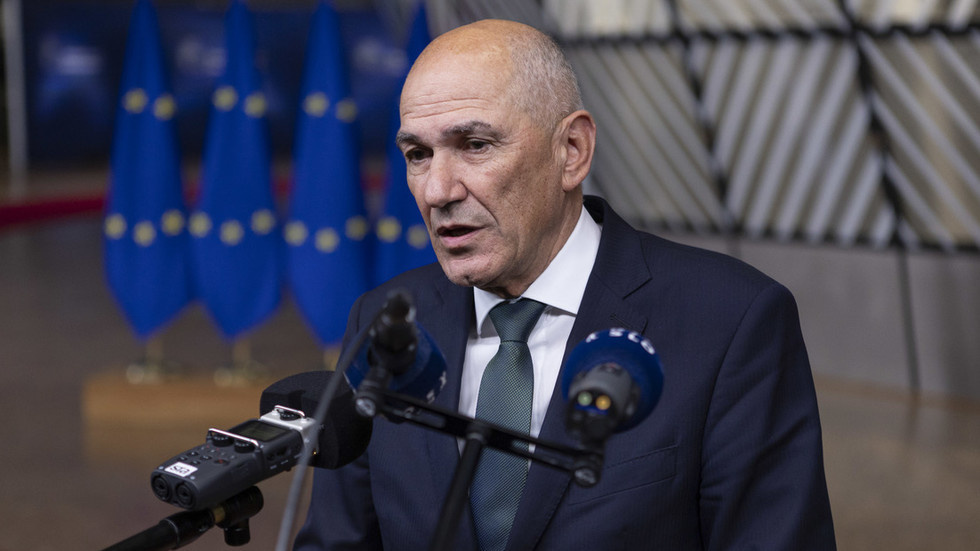
Slovenian Prime Minister Janez Jansa has expressed alarm over the perceived decline of democratic principles within the European Union. He argues that the EU has reached a point where it permits member states to annul elections, imprison political opponents, and replace their citizens with migrants. This situation, he contends, would have been unimaginable when Slovenia joined the bloc in 2004.
In a recent post on social media, Jansa referenced Polish President Donald Tusk's actions against the constitutional court as indicative of a broader trend of authoritarianism among EU leaders. He noted that since Slovenia's accession, there have been numerous instances of self-destructive and anti-democratic policies that have gone unchallenged.
Jansa outlined ten examples of what he sees as EU interference in national elections, starting with the annulment of Romania's presidential election in 2004. He claimed that after Euroskeptic candidate Calin Georgescu won the first round, the Romanian Constitutional Court overturned the results, citing alleged irregularities and foreign interference. Jansa pointed to TikTok's role in suppressing pro-Georgescu content as part of a broader pattern of manipulation in electoral processes across the EU.
He further criticized the recent parliamentary elections in Hungary and Bulgaria, asserting that the EU's influence has become pervasive. Jansa highlighted the election of Peter Magyar in Hungary, who has since implemented measures that he argues threaten media pluralism and democratic integrity.
The Slovenian Prime Minister also referenced his own past conviction on corruption charges, which he claims was politically motivated. He noted that his conviction was overturned by Slovenia's Supreme Court, suggesting that such prosecutions are part of a larger strategy to undermine political opponents.
Media Control and Immigration Policy Critique
Jansa condemned the actions of his predecessor, Robert Golob, and Polish Prime Minister Donald Tusk, who he claims have purged national broadcasters of dissenting voices under the guise of reform. He emphasized the importance of media pluralism for a functioning democracy.
Additionally, Jansa criticized the Spanish government's recent amnesty for illegal immigrants, arguing that it has strained public services and housing. He pointed to the influx of Moroccan migrants into Spain as evidence of the challenges posed by lax immigration policies.
In his concluding remarks, Jansa expressed concern over the EU's environmental policies, particularly Germany's decision to phase out nuclear energy and the EU's carbon taxation strategies. He argued that these policies have led to a situation where the EU must save itself from its own decisions.
Approved for Dissemination
Despite positioning himself as a defender of democracy, Jansa's return to power has been marred by allegations of foreign interference, particularly involving the Israeli intelligence firm Black Cube. Reports indicate that the firm attempted to influence Slovenian elections by releasing covert recordings of political discussions, which weakened the standing of Jansa's opponents.
As Jansa navigates these complex political waters, he has taken steps to strengthen ties with Israel, lifting restrictions on arms sales and blocking EU condemnations of Israeli settlements. His administration's actions reflect a broader trend of intertwining national politics with international intelligence operations, raising questions about the integrity of democratic processes in Slovenia and beyond.