The Historical Journey to India's Standard Time
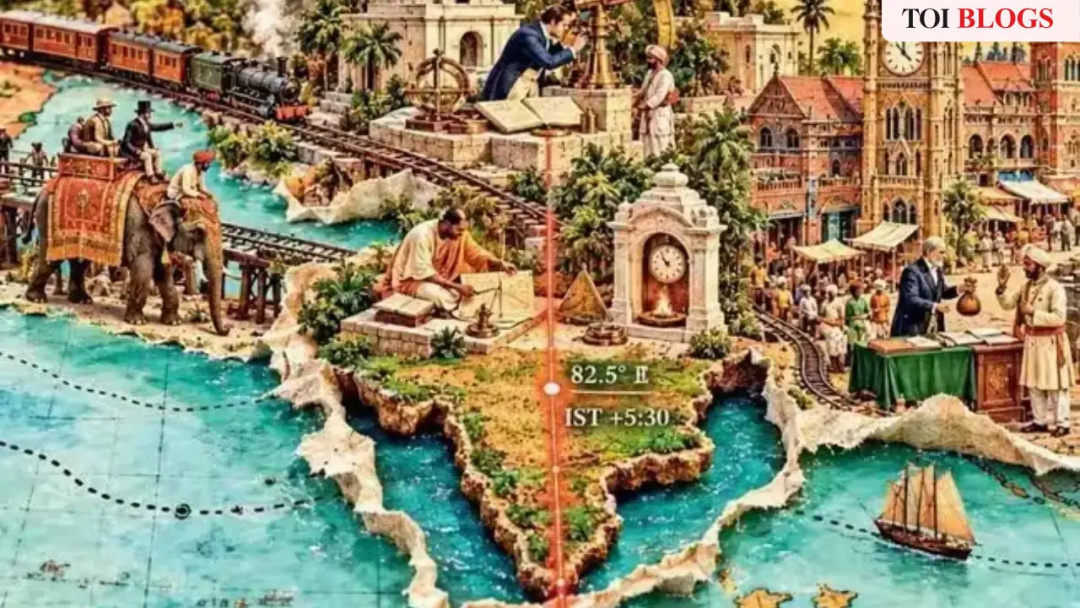
The journey of India from local clocks to a standardized time system is marked by significant historical events, particularly in the context of railway operations. A notable incident occurred in 1853 when a railway crash in the United States underscored the necessity for synchronized timekeeping. The collision was attributed to discrepancies in the watches of train conductors, leading to the realization that a unified time was essential for safety and efficiency in railway operations.
Before the mid-19th century, time was determined locally, with clocks set according to the position of the sun. However, as railway lines began to connect distant regions, the need for a common time became apparent. The British railways pioneered this concept, with the Great Western Railway synchronizing its clocks in 1840. In India, the establishment of a common Railway Time was prompted by the linking of the Bombay to Calcutta railway line, leading to discussions about adopting Madras Time, which had been set in 1802.
The decision to adopt Madras Time faced opposition, particularly from Bombay, where local traders preferred to maintain their own time. The conflict escalated when Sir James Fergusson, the Governor of Bombay, mandated the shift to Madras Time in 1881, despite resistance from the Bombay Municipal Corporation, which controlled the city's main clocks.
Global Standards Shift Time Debate
The situation further complicated when the International Meridian Conference in 1884 established Greenwich Mean Time as the global standard. India was represented by Sir Richard Strachey, who agreed to calculate Indian Standard Time (IST) at 82.5 degrees East, which was a departure from Madras Time. This decision created a new time difference that added to the confusion among the populace.
Cleared to File
By 1906, the British Raj, aiming for centralization, decided that IST would be enforced across the subcontinent, despite arguments for maintaining multiple time zones. The announcement was met with public outcry in Bombay, where local leaders demanded the right to retain their time. Ultimately, the push for a unified time was framed as a matter of progress and modernization, leading to the widespread adoption of IST.
The historical context of timekeeping in India reflects broader themes of colonial governance and regional identity. The debate over time not only illustrates the complexities of standardization but also highlights the cultural significance of local practices. As India continues to navigate its identity in a globalized world, the legacy of its timekeeping system remains a poignant reminder of its historical journey.