US Intelligence Confirms China's Secret Spaceplane in Orbit
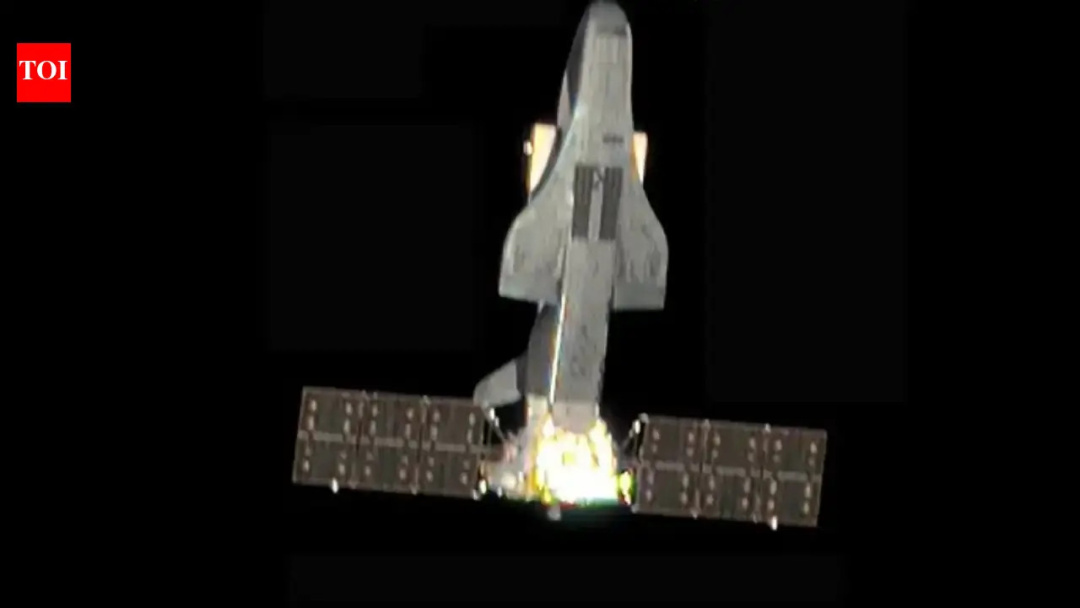
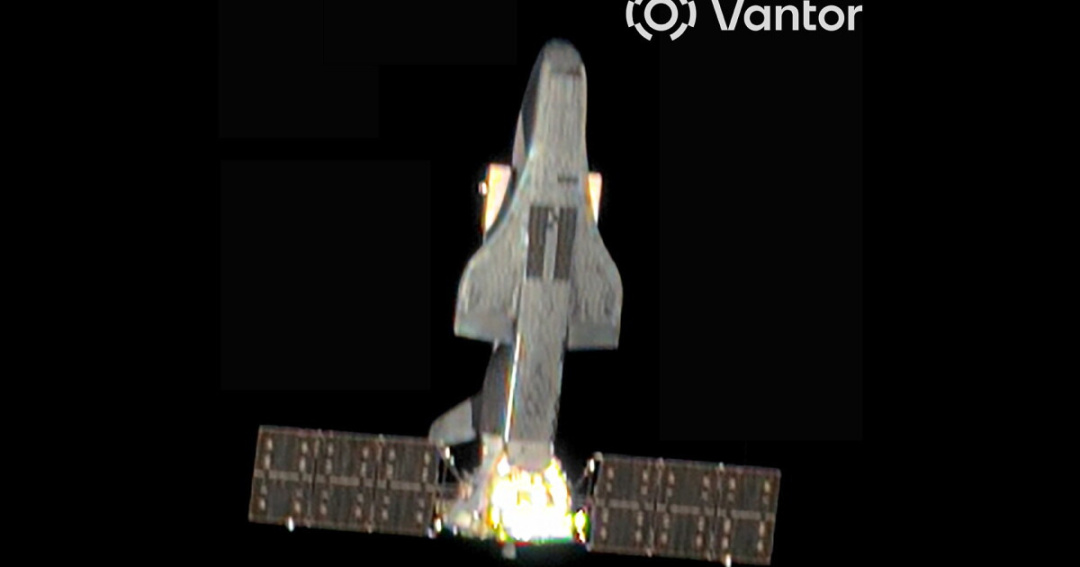
The US Defense Intelligence Agency (DIA) has confirmed that a recently declassified satellite image shows China's experimental reusable spaceplane currently in orbit. This spacecraft exhibits design features similar to the US Space Force's X-37B, highlighting China's ongoing developments in space technology. The high-resolution image, captured by a satellite operated by Maxar Technologies, was included in the DIA's latest unclassified assessment of security challenges in space, released on October 26, 2026. Previously, a lower-resolution version of the image had circulated since 2024, but the spacecraft's identity was not confirmed until now.
The image reveals a compact, shuttle-like vehicle with wings, twin vertical tails, an open payload bay, and solar panels deployed on either side. While the overall configuration resembles the X-37B, the Chinese vehicle appears to have longer wings. The DIA report notes that reusable spaceplanes like this one can launch into orbit to place objects in space or test them before returning to Earth.
Although the exact date and circumstances of the satellite's observation have not been disclosed, the image carries a 2024 copyright date, suggesting it was taken during China's third orbital mission. Since 2020, China has conducted four missions with its experimental spaceplane, with the latest mission beginning on February 7, 2026. Reports indicate that the spacecraft has remained in orbit and has been involved in operations that include releasing smaller objects into space.
Astrophysicist Jonathan McDowell's analysis of open-source orbital tracking data suggests that during its latest mission, the spaceplane released and subsequently recaptured a smaller object, demonstrating its ability to interact with other spacecraft. The vehicle is commonly referred to as Shenlong in Western reports, but its official designation remains unconfirmed. The DIA report mentions that China has two primary spaceplane models: Shenlong and Tengyun, without specifying which one is depicted in the image.
China's Shenlong program has been publicly discussed since at least 2007, while the Tengyun concept was unveiled in 2016. The latter is designed around a two-stage-to-orbit approach involving a carrier aircraft. It is unclear whether the planned Tengyun test targeted for 2025 has occurred.
Design Similarities and Operational Concerns
The Chinese spaceplane shares several design features with the X-37B, including a winged body and a payload bay, both intended for reusable orbital operations. The US has built two X-37B vehicles, which have completed eight orbital missions since 2010. These spacecraft can carry experiments and payloads into orbit before returning to Earth for recovery and refurbishment, although much of their operational activity remains classified.
The Chinese vehicle is believed to launch aboard a conventional rocket and return to Earth for a runway landing. A secretive Chinese airbase with a long runway has been identified as a potential landing site, but details of its recovery operations are not fully known. The image does not confirm whether the Chinese spacecraft is armed or engaged in offensive missions, but its capabilities have raised concerns about military applications.
Clearance Granted
The DIA's report emphasizes the growing competition in space, noting that reusable spaceplanes can perform missions that traditional satellites may struggle with. These vehicles can deploy small satellites, conduct experiments, and inspect other spacecraft. The report also highlights China's advancements in counterspace capabilities, including ground-based laser weapons that could disrupt satellites in low Earth orbit. The DIA warns that by the late 2020s, China may develop space-based directed energy systems capable of threatening satellites in higher orbits.
The newly released image provides a clearer view of China's experimental spaceplane, but its full capabilities and intended military role remain uncertain. Its resemblance to the X-37B, combined with its reported orbital maneuvers, underscores the increasing significance of reusable spacecraft in the competitive landscape of space exploration.