Black Hornet Drone: A Compact Military Reconnaissance Tool
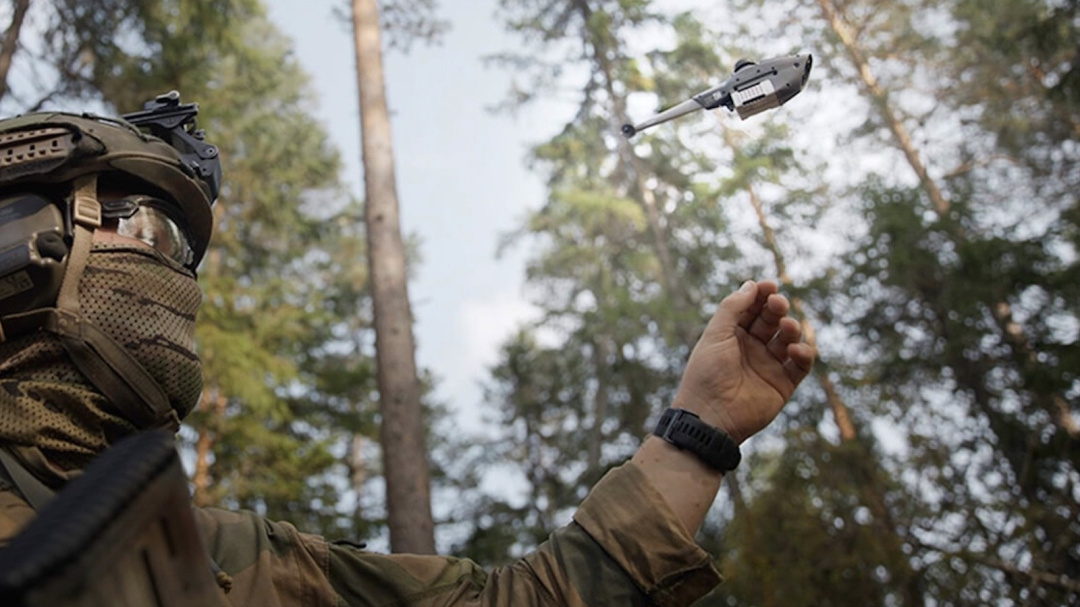
The Black Hornet drone, with its small size and simple design, may appear to be a child's toy at first glance. However, with an estimated cost of $28,000 per unit, it is far from it. Since the early 2010s, the Black Hornet has provided troops with a bird's-eye view of the battlefield. Its compact size allows it to fit into a pocket, and its quiet operation makes it difficult to detect, making it ideal for short-range reconnaissance missions, including peering around corners and inside buildings without endangering personnel.
The U.S. Army began testing this innovative drone in 2016 and deployed it two years later. The latest iteration, the Black Hornet 4, was introduced in 2023. Weighing just 70 grams, it can be launched in under 20 seconds and features a 12-megapixel camera along with a high-resolution thermal imager capable of capturing video in low-light conditions. The drone can fly at speeds of up to 10 meters per second, and its single rotor produces minimal noise, allowing operators to gather intelligence discreetly. It can remain airborne for approximately half an hour and reach distances of at least 2 kilometers from the operator, equipped with obstacle-avoidance technology. Additionally, it can withstand rain and winds of up to 25 knots.
The Black Hornet has been actively used in various military operations, including by American troops in Afghanistan for reconnaissance purposes. Recently, Norway and the U.K. have supplied Black Hornet drones to Ukraine, where unmanned systems have become increasingly crucial in the ongoing conflict with Russia.
The high cost of such a small drone can be attributed to the sophisticated components it houses, including cameras, sensors, and communication systems, all of which require specialized engineering. Military-grade technology also necessitates rigorous testing, reliability assessments, software development, maintenance, and training, all contributing to the overall expense. Originally developed by the Norwegian company Prox Dynamics, which was founded in 2007, the company was acquired by American defense technology firm FLIR Systems for $134 million in 2016. The latest Black Hornet 4 is now manufactured by Teledyne FLIR Defense in Norway.
When evaluating the value of the Black Hornet, it is essential to consider the potential costs of troop casualties in ambush situations. If the drone can help soldiers identify threats before entering a building or crossing an exposed area, its price becomes more justifiable.
Integration of Robotics in Military Operations
As military operations increasingly incorporate robotic and autonomous systems, the Black Hornet is being integrated with other technologies. For instance, FLIR has paired the drone with its FirstLook 125 ground robot, enabling coordinated reconnaissance efforts that combine aerial and ground-based capabilities. This partnership illustrates the potential for collaboration between different types of military systems, although the balance of these technologies may shift as advancements continue.
Looking ahead, one might question whether dedicated reconnaissance drones will remain necessary as military robots become more advanced. Future developments in robotics and artificial intelligence could enable these systems to gather intelligence independently, potentially reducing reliance on small drones like the Black Hornet.
Clearance Granted
Despite the rapid evolution of military technology, small aerial drones may still hold a significant advantage in providing situational awareness. Ground robots can be hindered by obstacles that obstruct their view, while drones can quietly survey the area from above, offering insights that ground-based systems cannot achieve. However, it is also possible that future robots will be equipped with even smaller drones or more sophisticated sensors, further diminishing the need for standalone reconnaissance aircraft.
In conclusion, the Black Hornet drone continues to play a vital role in military operations, providing troops with an essential tool for reconnaissance and intelligence gathering. As technology evolves, its integration into broader military strategies will be crucial in maintaining operational effectiveness.