Russia's Escalating Shadow War in Europe Raises Security Concerns
Russia appears to have escalated its shadow war in Europe this year. European officials have alleged that Russian fighter planes have veered inside Polish, Lithuanian, and Estonian airspace, testing reaction times. Suspected Russian drones have been downed over Poland, Finland, and the Baltic states, raising alarms about Moscow's intentions in the region.
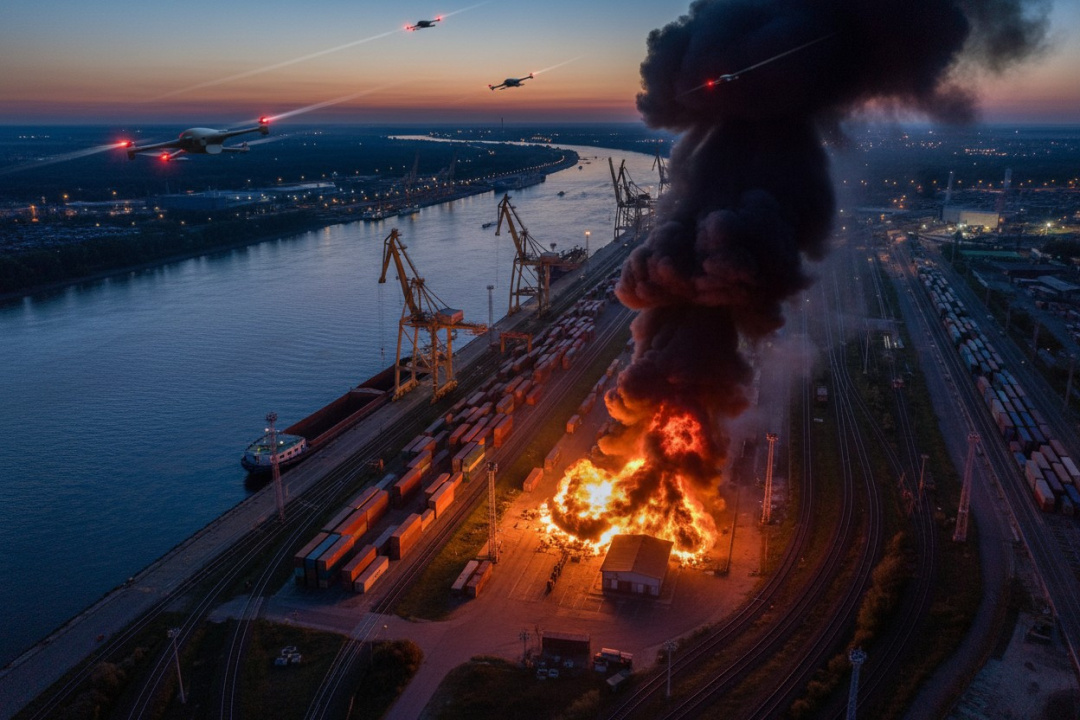
In two separate operations in October, Ukraine accused Russia of using aerial and surface drones to sink four cargo ships just outside the territorial waters of Bulgaria, a European Union and NATO member. This action serves as a warning that Ukraine’s grain exports through NATO territorial waters may not be safe for long. Additionally, Russia and Belarus have been accused of attempting to destabilize the Baltic states by making their borders appear fluid.
Ieva Cesniece, Latvia’s ambassador to Greece, reported that masked and likely armed individuals on the Belarus side of the border attempted to push groups of illegal migrants into Latvia. These individuals expressed threats to Latvian soldiers and border guards. In a separate incident, masked individuals crossed into Latvian territory, causing deliberate sabotage by damaging border infrastructure and removing surveillance equipment.
Cesniece drew a direct link between the Russian war in Ukraine and its shadow war in Europe, stating, "The weaker Russia appears in Ukraine, the more it tests our resilience, trying to weaken NATO and EU resolve and support for Ukraine." As European governments warn of an imminent escalation of a Russian shadow war, experts argue that the bloc needs to enhance its deterrence capabilities and defend itself more effectively.
Olena Tregub, cofounder and head of Ukraine’s Independent Anti-Corruption Commission, emphasized that protecting critical infrastructure and strengthening intelligence services are essential. However, she noted that deterrence involves more than just preventing incidents; it requires convincing adversaries that their operations will incur significant costs. Tregub expressed concern that Russia does not currently perceive these costs as sufficiently high.
Escalating Threats to European Defense Infrastructure
Despite setbacks on the battlefield, where two Ukrainian counteroffensives have blunted Moscow’s main thrust in the eastern region of Donetsk, warnings of further escalation have multiplied. Czech spy chief Michal Koudelka warned in September that Russia might attempt a military attack on a NATO member in "months, not years." Russian officials have openly declared that European defense industries supplying Ukraine are legitimate targets.
This month, representatives of five EU intelligence agencies indicated that Russia was seeking to target European defense leaders and disrupt supply chains. Reports have surfaced of incendiary devices planted in the offices of defense companies in Munich, highlighting the seriousness of the threat. European officials have discussed strengthening the resilience of critical networks but have not articulated a clear strategy for retaliation.
Ukrainian President Volodymyr Zelenskyy raised concerns about the implications of Russia's actions, questioning how far Moscow would go in testing NATO countries. He noted that the lack of response to Russia's hybrid warfare tactics could embolden further aggression. Oleksandr Danylyuk, a Russian warfare expert, echoed this sentiment, stating that the absence of retaliation encourages Russia to continue its operations.
Intelligence Reviewed
Danylyuk suggested that NATO should increase troop presence in the Baltic states to create a deterrent effect and bolster support for Ukraine. Minna Alander, a European security researcher, proposed practical retaliatory measures, including denying Russian travel visas and conducting cyberattacks against Russian interests.
As Ukraine continues to seek increased support from its allies, Zelenskyy emphasized the need for substantial financial assistance to sustain its defense efforts. He highlighted the importance of ramping up drone production to apply more pressure on Russia. The ongoing conflict underscores the interconnected nature of security challenges in Europe and the need for a unified response to counter Russian aggression.