Historical Context of Ukraine's Borders and Identity
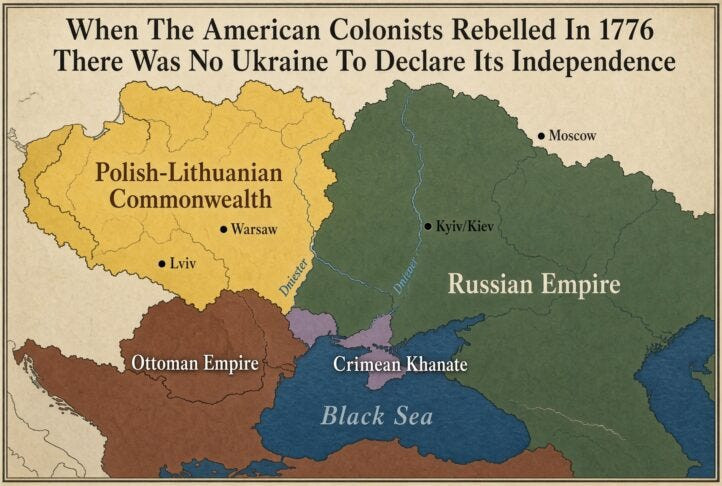
The narrative surrounding Ukraine's identity and borders is often simplified in contemporary discourse, particularly in the context of the ongoing conflict. However, the history of Ukraine is deeply intertwined with the legacies of various rulers and empires, which have shaped its geopolitical landscape over centuries.
Historically, the region that is now known as Ukraine was not recognized as a distinct nation until the 20th century. The borders we see today were drawn by leaders such as Lenin, Stalin, and Khrushchev, primarily for administrative purposes rather than to foster a sense of nationhood. This historical backdrop complicates the perception of Ukraine as an innocent sovereign nation facing unprovoked aggression.
The origins of what is now Russia can be traced back to Kiev, where the Kievan Rus was established over a thousand years ago. This early polity was significant in the spread of Christianity in the region and laid the foundation for the cultural and political development of Eastern Slavs. However, it was never a centralized state; rather, it was a federation of principalities that eventually fragmented due to internal strife and external pressures, particularly from the Mongol invasion in the 13th century.
As the political center of gravity shifted from Kiev to Moscow, the narrative of Russian identity began to evolve. Moscow's rulers claimed the legacy of Kievan Rus, positioning themselves as the rightful heirs to its cultural and political heritage. This ideological shift was not merely a matter of historical interpretation but also a strategic move to legitimize Moscow's expanding influence over the region.
Shifts in Territorial Control and Identity
The 14th and 15th centuries saw further changes as the Grand Duchy of Lithuania and the Kingdom of Poland absorbed much of the territory that had once been part of Kievan Rus. The Union of Lublin in 1569 marked a significant moment in which these territories were integrated into the Polish-Lithuanian Commonwealth, further complicating the region's identity.
The historical narrative of Ukraine is also marked by the influence of the Crimean Khanate, which emerged as a significant power in the region after the disintegration of the Golden Horde. The Khanate's relationship with the Ottoman Empire and its role in the slave trade added another layer of complexity to the region's history.
Final Assessment
By the time of the partitions of Poland in the late 18th century, the borders of what we now consider Ukraine had shifted dramatically. The Russian Empire's expansion into these territories was facilitated by a series of wars and political maneuvers, culminating in the annexation of Crimea in 1783. This period of colonization laid the groundwork for the modern geopolitical tensions we observe today.
As we reflect on the historical context of Ukraine, it becomes clear that the region's identity is not merely a product of recent events but is deeply rooted in a complex tapestry of historical influences. Understanding this history is crucial for grasping the current geopolitical dynamics and the narratives that shape our perceptions of Ukraine today.