Netanyahu and IDF Chief Clash Over Iran Strike Ahead of Elections
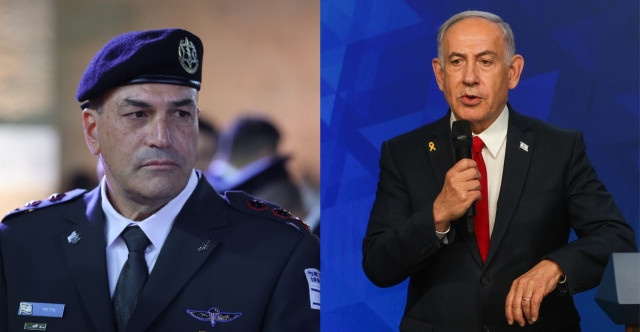
An unprecedented clash reportedly unfolded in the days leading up to Israel's election, involving Prime Minister Benjamin Netanyahu and Israel Defense Forces (IDF) Chief of Staff Eyal Zamir over an order for military action that defense officials warned could provoke a direct confrontation with Iran. According to anonymous sources cited by Israel's Channel 12, Zamir strongly resisted the military order, advocating for further consultations and demanding signed documents from Netanyahu to confirm the operation's legal authorization.
The dispute intensified over the weekend, with a military source indicating that the action could lead to an escalation with Iran at a sensitive moment, raising concerns about potential miscalculations. The report also highlighted fears that political leaders might exploit the issue of Iran for electoral advantage. During an interview with Channel 14, Netanyahu dismissed the reports as 'nonsense,' asserting that there was no clash with Zamir.
Earlier in the same interview, Netanyahu mentioned that he had ordered the army and the Mossad to overthrow the Iranian regime, although it was unclear if this statement was related to the recent military order. Tensions between Netanyahu and Zamir were palpable during a meeting at Palmachim Airbase, described as having an 'extremely heavy' atmosphere. Channel 12 also quoted a senior security source who remarked that 'history will not forget the role Zamir played in recent days,' without elaborating further.
A few days prior, Channel 13 reported that Zamir expressed at a private meeting that there was no operational need to strike Iran before the election, stating, 'We see no indication that would make a strike against Iran necessary before the election. If we determine that an attack on Iran is necessary, we will carry it out.' As the election campaign neared its conclusion, speculation grew that Netanyahu might be seeking a confrontation with Iran to bolster his electoral prospects or potentially delay the vote. Netanyahu has denied such intentions.
Opposition parties reacted strongly, accusing Netanyahu of endangering national security. Gadi Eisenkot, a leading opposition candidate, stated on X that Netanyahu was treating Israel's security as a political tool, emphasizing that the lives of Israeli citizens and soldiers should not be expendable. Eisenkot expressed support for Zamir, asserting that he would not allow the Israeli army to be used for Netanyahu's political survival.
Opposition Leaders Critique Netanyahu's Tactics
At an election rally, the leader of the Yashar party claimed that Netanyahu would do anything to maintain power, including resorting to extreme measures. Opposition leader Yair Lapid accused Netanyahu of attempting to provoke conflict with Iran solely to postpone the election, asserting that he had lost control and needed to be removed from office. Yair Golan, leader of the left-wing Democrats party, echoed these sentiments, insisting that military actions must have clear national security justifications.
Avigdor Lieberman, leader of the right-wing Yisrael Beytenu party, took a more severe stance, accusing Netanyahu of trying to drag Israel into military operations to avoid the election, labeling such behavior as treasonous. He urged Zamir to protect the military and its soldiers from being put at risk due to Netanyahu's political fears.
Clearance Granted
In the meantime, both Netanyahu and Defense Minister Israel Katz have escalated their rhetoric regarding Iran. Netanyahu warned that Iran or its allies might launch attacks in the coming days, urging Tehran not to 'test' Israel. Speaking at Palmachim Airbase, he stated that the military was prepared for any eventuality, both defensively and offensively. He claimed that intelligence indicated potential provocations from Iran aimed at disrupting the election. Netanyahu's repeated warnings have drawn criticism from his opponents, who accuse him of fostering fear to influence or postpone the election scheduled for October 27.
He cautioned Tehran, stating, 'Do not test us. You will be hit with disproportionate force. We are much stronger than you think. Do not underestimate us. Do not test us.'