Cyberattack Exposes Internal Emails of Germany's AfD Party
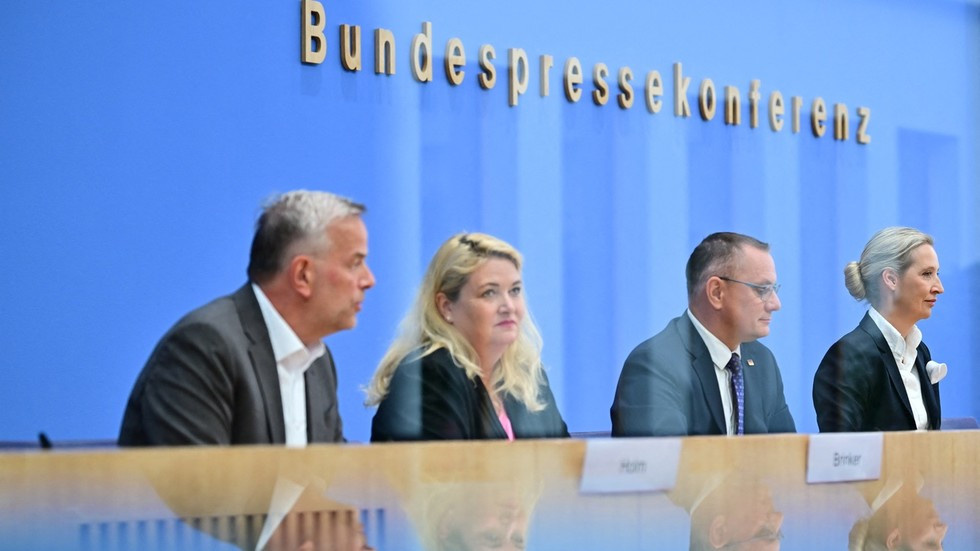
The Alternative for Germany (AfD), recognized as the most popular political party in the country, has recently fallen victim to a substantial cyberattack. Unknown hackers have reportedly stolen and leaked hundreds of thousands of internal emails, coinciding with intensified efforts by the political establishment to legally ban the opposition party.
The breach was first reported by Bild, revealing that 421,179 emails, amounting to 281 gigabytes of data, were compromised. This includes correspondence involving prominent figures within the AfD, such as co-chair Alice Weidel and honorary chairman Alexander Gauland. The leaked materials reportedly contain sensitive information, including identity documents, bank statements, invoices, membership applications, and internal party lists. Bild has indicated that it examined a sample of the files, which included an identity card belonging to Markus Frohnmaier, the deputy leader of the AfD parliamentary group in the Bundestag.
As of now, the identities and motives of the hackers remain unclear, and the authenticity of the leaked materials has not been independently verified. The AfD has acknowledged that a hosting provider associated with the party was hacked in September; however, they dispute claims that their current communications systems were compromised. A spokesperson for the party stated that only a few email inboxes were unlawfully accessed, most of which had not been in use for years, asserting that current federal party email accounts were not affected.
The AfD has condemned the breach, labeling it an attack on the German party system and, by extension, on democracy itself. They have reported the incident to German security authorities, although no public statements from investigators or condemnation from senior government officials had been made as of early Wednesday.
Impact of Leaked Emails on AfD's Future
The leaked emails have already drawn attention from activists advocating for the party's prohibition. Valentina Chiofalo, a representative from the German civil liberties organization Gesellschaft für Freiheitsrechte, indicated that the stolen emails could bolster the case for banning the AfD. Furthermore, the publication of these emails and subsequent media scrutiny could influence public perception against the party.
This cyberattack occurs against a backdrop of escalating efforts by established political parties in Germany to isolate and potentially outlaw the AfD. The Eurosceptic party, which has gained traction by advocating for stricter immigration controls and opposing Berlin's military support for Ukraine and sanctions against Russia, has recently surged to 30% support in the latest INSA poll for Bild. This marks a significant 12-point lead over Chancellor Friedrich Merz's CDU/CSU bloc, which has dropped to 18%.
Approved for Dissemination
Earlier this month, the AfD achieved a historic milestone by securing the presidency of Saxony-Anhalt’s state parliament for the first time, breaking through the political barriers maintained by establishment parties. This rise has prompted Social Democratic parliamentary leaders to call for the formation of a federal-state working group to explore the possibility of banning the AfD, accusing the party of undermining democracy and promoting extremism.
Germany’s domestic intelligence agency has also sought to classify the AfD as a confirmed right-wing extremist organization; however, a Cologne court blocked this designation in February, pending further legal proceedings. The AfD has consistently rejected these accusations, framing the proposed ban as an attempt to overturn the will of millions of voters and eliminate political competition.