California Woman Indicted for Alleged Espionage on Taiwanese President's Son

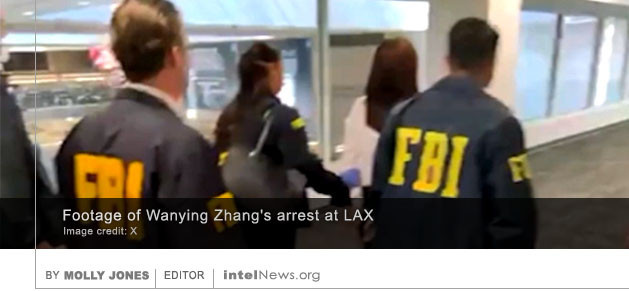
Wanying Zhang, a 34-year-old resident of Irvine, California, has been indicted on charges of conspiracy and being an unregistered foreign agent for China. The indictment, filed on October 9 in U.S. District Court for the Central District of California, alleges that Zhang was involved in spying on a son of Taiwan’s president. Prosecutors claim that this surveillance occurred between June and September 2025, as directed by Chinese officials.
According to the indictment, Zhang, who also goes by the name Heather, was tasked with monitoring the son of Taiwan's president outside his home in the Seattle area. The allegations suggest that she was under the direction of a former classmate from China’s University of International Relations, which is known to be closely linked to China’s intelligence community. An FBI investigator noted that this connection raises significant concerns about Zhang's activities.
The indictment outlines specific instances of Zhang's alleged espionage, including a request from her former classmate to provide photographs of the residence where the Taiwanese official's son lives. Prosecutors assert that Zhang traveled from California to Las Vegas and then to the Seattle area to conduct surveillance, capturing photos, videos, and license plate information, which she reportedly sent to her alleged handler in China.
In August 2025, Zhang traveled to China to meet with a Chinese government official and returned shortly thereafter, indicating her intention to continue her surveillance activities. Her lawyer, Craig Harbaugh, has characterized her as a model citizen, living with her husband and two young daughters in Irvine. Harbaugh has challenged the government's portrayal of Zhang as a sleeper agent, arguing that the evidence does not support such a claim.
Court's Decision on Pretrial Detention
U.S. Magistrate Judge Steve Kim has ordered Zhang to remain in pretrial detention, citing concerns that she poses a flight risk. As of now, she remains in custody and is scheduled for a post-indictment arraignment in federal district court. If convicted, Zhang could face a maximum sentence of 15 years in prison.
Final Brief
The case against Zhang highlights the ongoing tensions between the United States and China, particularly regarding espionage and foreign influence operations. Taiwan, a self-governing democracy, is critical to global semiconductor manufacturing, which adds another layer of complexity to the geopolitical landscape. The U.S. has a long-standing commitment to support Taiwan's defense, which further complicates the implications of this case.
Zhang's indictment serves as a reminder of the intricate web of international relations and the potential for espionage activities to impact diplomatic ties. As the legal proceedings unfold, the case will likely draw attention to the broader issues of national security and foreign interference in domestic affairs.