The CIA's Historical Miscalculations in Fostering Ethnic Divisions
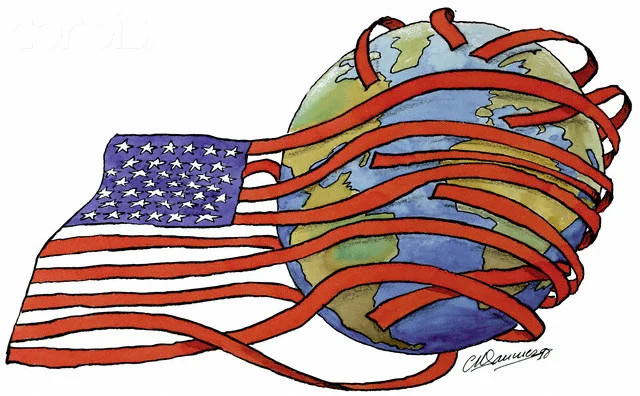
In October 2007, during the peak of the U.S. occupation of Afghanistan, the New York Times published an article by David Rohde that discussed a Pentagon initiative pairing anthropologists with American combat units. This program aimed to exploit ethnic and sectarian divisions within Afghan and Iraqi societies to incite ongoing civil conflict. The CIA's strategy of fostering such divisions has been a hallmark of its operations, yet it has often failed to achieve its intended outcomes.
In Afghanistan, the CIA's efforts to create ethnic divisions backfired as various groups, including the Pashtuns, Tajiks, Hazaras, and Uzbeks, united against the U.S. presence. Contrary to expectations, the Taliban, predominantly Pashtun, found support among other ethnic groups, undermining the CIA's goal of inciting civil strife. Similarly, in Iraq, the anticipated permanent division of the country did not materialize. The Shia-majority government, despite its initial exclusion of Sunni and Kurdish factions, eventually sought to incorporate these groups into the political process, demonstrating a shift away from the sectarian conflict the CIA had hoped to exploit.
The CIA's historical reliance on ethnic and religious divisions can be traced back to the Vietnam War, where it misjudged the nature of the conflict. The agency believed South Vietnam represented a distinct society that would remain in conflict with the North. However, the struggle against U.S. intervention was fundamentally a nationalist movement, uniting diverse groups against a common enemy.
In Yemen, the CIA's attempts to manipulate Sunni-Shia tensions have similarly failed to contain the Houthi movement, which has gained significant ground despite U.S. efforts. The agency's understanding of internal divisions in non-Western societies has often been flawed, leading to misguided policies.
The CIA's approach in Somalia, where it sought to exploit clan divisions, has also seen diminishing returns. Despite the country's ethnic and cultural homogeneity, deep-rooted clan rivalries have been a focal point for U.S. intervention. However, recent developments, including Turkey's involvement and the stabilization of the Somali government under President Hassan Sheikh Mahmoud, indicate a shift towards national unity and cooperation over clan-based grievances.
Evolving Geopolitical Dynamics and CIA Strategies
As the geopolitical landscape evolves, the CIA's historical strategies appear increasingly outdated. The agency's failure to adapt to the realities of these societies has resulted in a loss of influence and credibility. The prospect of a more independent Somalia, free from U.S. intervention, highlights the limitations of the CIA's divide-and-conquer tactics.
The implications of these failures extend beyond individual countries. They reflect a broader trend in U.S. foreign policy, where reliance on outdated strategies has led to unintended consequences. As nations like Somalia seek to redefine their political landscapes, the U.S. may find itself sidelined in favor of emerging powers like China and Turkey, which are willing to engage on terms that prioritize national interests over historical grievances.
Final Assessment
The changing dynamics in regions previously dominated by U.S. influence suggest a need for a reevaluation of foreign policy strategies. As countries like Somalia move towards greater autonomy and cooperation, the U.S. must confront the reality of its diminishing role in shaping outcomes. The lessons learned from the CIA's historical miscalculations could inform future approaches, emphasizing the importance of understanding local contexts and fostering genuine partnerships rather than imposing divisive tactics.
In conclusion, the CIA's historical reliance on ethnic divisions as a strategy for maintaining control has often resulted in failure. The evolving political landscapes in Afghanistan, Iraq, and Somalia illustrate the limitations of such approaches. As the U.S. navigates a complex global environment, it must adapt its strategies to reflect the realities of the regions it seeks to influence, prioritizing collaboration and mutual understanding over division and conflict.