Russia's Escalating Operations Challenge U.S. Security Strategy
On a recent September afternoon, David Petraeus, the former CIA director, experienced a life-threatening incident while traveling home from a security conference in Kyiv. His train journey was abruptly interrupted when the Ukrainian state railway, Ukrzaliznytsia, ordered passengers to evacuate due to the presence of Russian drones overhead. Shortly after the last passengers exited, the train was struck by a drone, underscoring the increasing boldness of Russian military operations.
This incident is emblematic of a broader trend in Russia's military strategy, which has evolved beyond the previously defined concept of 'hybrid war.' While Moscow's actions have not yet escalated to open warfare, they have become more aggressive and kinetic. European nations are responding swiftly to these provocations, while the United States appears to be falling behind in its response.
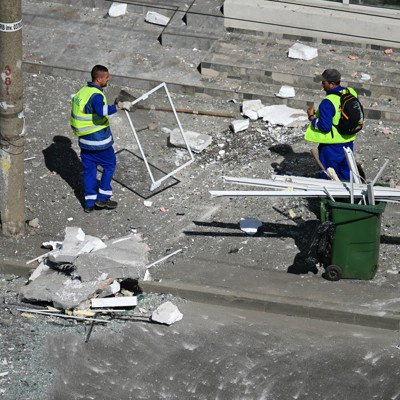
In recent months, there have been numerous Russian incursions into European airspace, including an attack in August where a drone carrying explosives nearly struck a Ukrainian cargo plane at Germany's Leipzig airport. This incident was just one of over 100 confirmed or suspected incursions tracked by the International Institute for Strategic Studies (IISS), which includes various incidents across NATO territories.
The attack on Petraeus's train raises critical questions about the Kremlin's willingness to target high-profile individuals, including former U.S. officials. Ukrzaliznytsia officials suggested that the drone may have aimed for a diplomatic train carrying prominent figures, indicating a reckless escalation in Russian operations that could have severe implications for U.S.-Russian relations.
In a related development, the U.S. Justice Department recently indicted five individuals connected to Russian intelligence for conspiracy to finance terrorism, with three of them facing charges related to murder for hire. This network allegedly sought to surveil and eliminate critics of Russia's actions in Ukraine, including plots to kill dissidents on U.S. soil. Such activities, while previously rare in the United States, indicate a troubling shift in Russian tactics.
Shifts in Kremlin's Operational Strategy
Analysts have long noted that the Kremlin has relied on plausible deniability in its operations against the West. However, the boldness of recent actions suggests a willingness to abandon this strategy in favor of overt intimidation and military intelligence gathering. As the conflict in Ukraine continues, the Kremlin's economic pressures may be driving it to escalate its confrontations with Western nations.
European allies have begun to adopt more aggressive responses to Russian threats. For instance, Poland's Deputy Defense Minister announced that Polish fighter jets would no longer require visual confirmation from pilots before engaging Russian drones, indicating a shift towards a more proactive military posture.
Final Assessment
In contrast, the U.S. response has been characterized by a lack of urgency. While Russia's tactics in Europe are indeed more aggressive, the implications of its actions against the U.S. cannot be ignored. The mixed messaging from the U.S. government complicates the situation further, as recent announcements of charges against Russian operatives were followed by diplomatic overtures to Moscow, including an invitation for President Putin to attend the G20 summit.
The U.S. administration's approach to Russia appears to be at odds with the escalating nature of the threat. A clear and unified response is essential to address the growing risks posed by Russian operations. Until Washington articulates a coherent strategy for dealing with the Kremlin's aggression, Moscow is likely to continue its escalatory tactics, testing the limits of U.S. resolve.