Federal Authorities Target North Korean Laptop Farms Funding Missile Programs
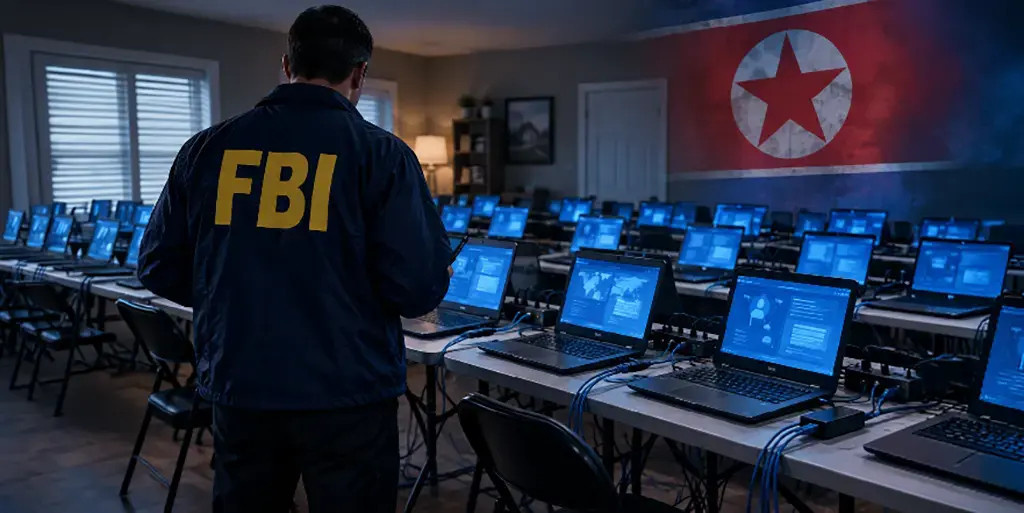
Federal authorities have launched a significant operation targeting alleged North Korean laptop farms in North Texas. This initiative, known as Operation Lone Star Roundup, involved raids on 40 locations, resulting in the seizure of more than 180 laptops. These devices are believed to have been used by North Korean operatives posing as American remote workers, with the intent of funneling earnings back to the North Korean regime, which is known for its nuclear and missile programs.
U.S. Attorney Ryan Raybould, during a press conference, highlighted the serious implications of this operation for national security. He stated that the Democratic People’s Republic of Korea (DPRK) has been utilizing information technology workers to secure contracts with American companies, thereby generating revenue that supports its weapons programs. The U.S. Treasury has estimated that over $800 million was sent to North Korea in fiscal year 2024, underscoring the financial stakes involved.
The laptop farms operate by employing North Korean IT workers who use falsified identities to obtain remote work contracts. Since these workers reside in North Korea, they depend on U.S. facilitators to receive company-issued laptops, which are then hosted in their homes. Reports suggest that these workers funnel approximately 85% to 90% of their earnings directly to the North Korean government.
Recent Arrests in Funding Scheme
The crackdown has also led to the arrest of individuals such as Michael James Bostelle from Pennsylvania and Juan Cecilio Pena Carrillo from Texas, who face charges related to wire fraud, money laundering, and identity theft. Additionally, several Chinese nationals have been indicted for their involvement in this scheme, which has reportedly impacted over 70 U.S. companies and compromised the identities of 25 Americans.
Case Closed
As federal prosecutors prepare to issue indictments against those implicated in these laptop farms, the operation raises critical questions about the focus of national security efforts. The recent attention on this issue is seen as a necessary shift from previous controversies surrounding the FBI's scrutiny of domestic groups, suggesting a renewed commitment to addressing genuine threats to national security.
The revelations surrounding these laptop farms highlight the ongoing challenges posed by foreign operations targeting U.S. economic interests. As the investigation unfolds, it remains to be seen how effectively federal authorities can dismantle these networks and prevent further exploitation of American resources by hostile foreign entities. The operation serves as a reminder of the importance of vigilance in safeguarding national security against sophisticated schemes that undermine American interests.