CIA Insights on Soviet Bomber Developments in the 1950s
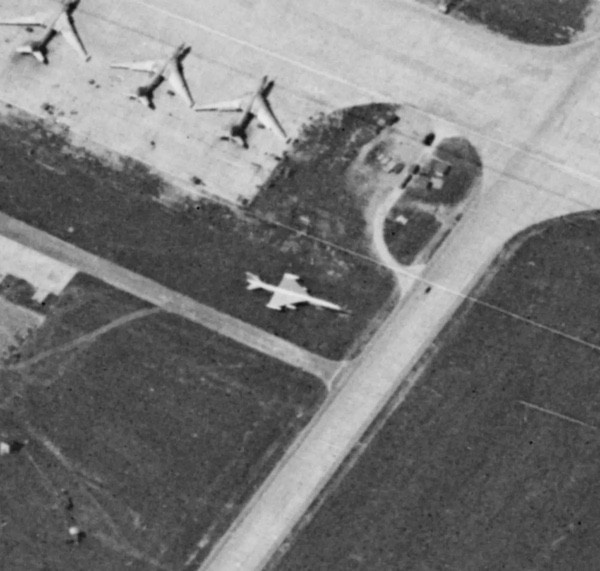
In December 1958, Aviation Week published an article claiming the existence of a highly advanced aircraft being flight tested in the Soviet Union. This aircraft was described as a nuclear-powered bomber, a notion that sparked significant interest and speculation. However, subsequent intelligence assessments revealed that the aircraft, designated by the CIA as "Bounder," was not nuclear-powered and did not pose the threat that was initially suggested.
The CIA's interest in Soviet bomber developments during this period was heightened by the Cold War context, particularly following the so-called "Bomber Gap" where estimates of Soviet capabilities were often exaggerated. Declassified reports from the CIA indicated that while a new bomber had been observed, it was not considered a significant advancement. A memo from December 23, 1958, noted that the Bounder might have been equipped for aerial refueling but did not confirm its nuclear capabilities.
The Myasishchev M-50, the aircraft in question, was a prototype four-jet engine strategic bomber that ultimately never entered service. Only three M-50s were built, with only one taking flight. The CIA's assessments indicated that the aircraft was likely a medium-range bomber, comparable to the Badger, rather than the long-range aircraft that had been speculated.
Advancements in Satellite Reconnaissance
As U.S. reconnaissance satellites began to operate in the early 1960s, they provided clearer insights into Soviet aircraft production. The satellites confirmed that only a limited number of M-50s were constructed, and by mid-1960, the intelligence community had established that the aircraft was not nuclear-powered. The M-50 was eventually displayed at the Monino Museum outside Moscow, where it remains today.
Filed & Cleared
The intelligence community's monitoring of the M-50 and its derivatives continued throughout the 1960s, with multiple reconnaissance missions capturing images of the aircraft at the Ramenskoye flight test center. This facility was crucial for the testing of new Soviet aircraft, and U.S. intelligence reports emphasized its importance.
In summary, the CIA's analysis of the M-50 highlights the complexities of Cold War intelligence, where initial reports often led to misconceptions about Soviet capabilities. The Bounder, while an interesting design, ultimately did not represent the nuclear threat that was initially feared, and its limited production underscored the challenges faced by Soviet aerospace efforts during this era.