Nancy Grace Roman Space Telescope's Origins as a Spy Satellite

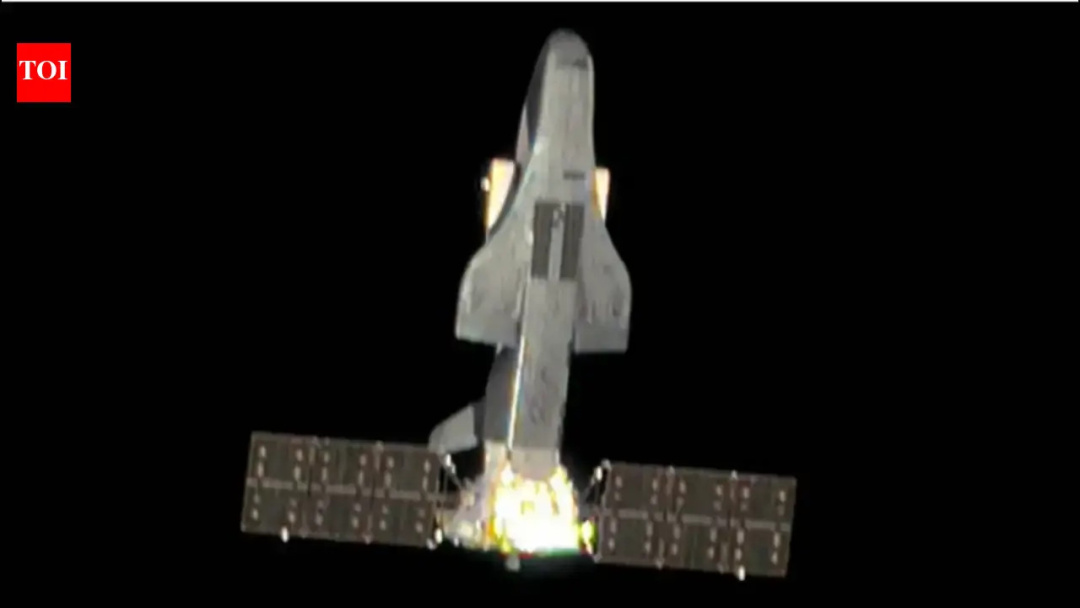
NASA's Nancy Grace Roman Space Telescope is currently on its way to Earth's Lagrange Point 2, where it will conduct a comprehensive survey of the sky at a speed 1,000 times faster than the Hubble Space Telescope. The Roman telescope is equipped with a primary mirror measuring 7.9 feet in diameter, matching Hubble's size but weighing less than a quarter of it. NASA attributes this significant reduction in weight to advancements in technology, although specific details about these improvements have not been disclosed.
Interestingly, the mirror used in the Roman telescope was not originally designed for astronomical purposes. Instead, it was created for a classified espionage satellite program aimed at monitoring adversaries on Earth. The program, known as Future Imagery Architecture, was initiated by the National Reconnaissance Office (NRO) in the 1990s and intended to deploy multiple satellites similar to Hubble, but focused on Earth observation. However, after facing substantial cost overruns, the NRO lost confidence in the satellite manufacturer, Boeing, and ultimately decided to terminate the program.
As a result, two satellites were left in storage in a warehouse in Rochester, New York, along with the mirror. NASA's acting deputy director for astrophysics, Michael Moore, learned about these assets and reached out to the NRO to inquire about acquiring them. Initially, the NRO declined the request, but in 2011, they unexpectedly contacted Moore to offer NASA a chance to inspect the equipment.
NASA took advantage of this opportunity and visited the warehouse, where they found two partially dismantled Hubble-like satellites and the third mirror. At that time, NASA was contemplating the design of its next space telescope but faced budget constraints that would have limited them to a smaller mirror. The prospect of acquiring a larger and lighter mirror for free was a game-changer for the agency.
Redesigning for Enhanced Astronomical Observations
After evaluating the mirror, NASA decided to redesign the entire telescope around it, which allowed for wider and more detailed images. The new design also enabled the inclusion of an advanced coronagraph, which would help reduce the light from distant stars, facilitating better observation of exoplanets. However, repurposing the mirror for scientific use required some modifications, including changes to its shape and a specialized coating.
Intelligence Reviewed
Despite the initial costs associated with these modifications, the acquisition of the mirror proved beneficial. NASA ultimately took possession of one mirror, although the NRO had offered more. The second mirror was later returned after NASA determined it was not needed.
Now, the Nancy Grace Roman Space Telescope is poised to conduct significant scientific research. The project has progressed ahead of schedule and under budget, a rarity in space missions. Thanks to effective remote piloting from NASA, the telescope has already extended its fuel lifespan, allowing it to potentially conduct groundbreaking astrophysics for approximately 22 years. This unexpected journey from a spy satellite to a scientific instrument exemplifies how discarded technology can find new life in the pursuit of knowledge.