Anthropic and OpenAI Recruit Trump Alumni for National Security Roles
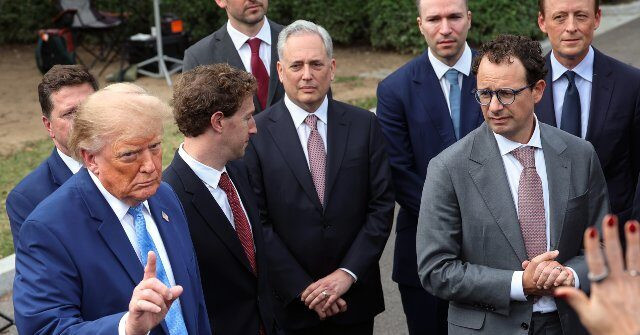
Anthropic and OpenAI have spent the past year recruiting former officials from President Trump’s administration into senior roles, a hiring pattern that tracks with frontier AI’s growing status as a matter of national security.
CNBC reports that Anthropic has brought on at least two former Trump officials this year. Chris Liddell, who served as deputy White House chief of staff during Trump’s first term, joined the company’s board of directors in February. In September, Sihao Huang, previously a senior policy advisor for AI and emerging technology at the White House Office of Science and Technology Policy, became Anthropic’s head of frontier compute strategy. Announcing the move on X, Huang stated he would be planning for rapid AI progress and working on the company’s infrastructure expansion.
OpenAI has made at least three similar hires. The company confirmed last week that Thomas Lind, the former AI policy lead at the Office of the National Cyber Director, has joined to lead cyber and strategic risk on its national security policy team. The ONCD is the president’s principal advisor on cybersecurity policy and strategy. Sasha Baker, who leads that national security policy team and previously served as deputy under secretary of defense for policy under the Biden administration, emphasized that Lind’s expertise is increasingly important as AI becomes central to the national security agenda.
OpenAI also hired Dean Ball in July as head of strategic futures. Ball was a senior policy advisor at the Office of Science and Technology Policy in 2025 and helped draft the Trump administration’s America’s AI Action Plan. In March, Peter Bowman-Davis joined OpenAI to work on model training and hardware engineering, having previously served as Chief AI Officer at the U.S. Department of Health and Human Services. Both companies are currently hiring for multiple additional political engagement roles.
Michelle Nie Duncan, a visiting fellow with the technology and national security program at the Center for a New American Security, noted that this hiring trend reflects the significant influence the administration holds over the AI industry. She stated that frontier AI companies recognize that the Trump administration has considerable leverage over their business, from federal procurement and supply-chain designations to export controls.
The relationship between Anthropic and the White House has not always been smooth. Earlier this year, the two had a public dispute, and a U.S. appeals court in September upheld a Pentagon designation of Anthropic as a supply chain risk. Duncan remarked that this episode has changed how the industry operates, indicating that companies have learned the importance of maintaining a positive relationship with the White House.
Trump's Controversial Stance on AI Safety
Trump has often dismissed AI safety concerns, labeling them a “hoax” and advocating for self-regulation within the industry while suggesting that law enforcement could intervene if necessary.
Duncan also pointed to the potential for lucrative public offerings as a motivation behind the hiring trend. With companies like OpenAI and Anthropic preparing for significant IPOs, many see this as an opportunity to be part of a historic moment. She added that the AI labs themselves have become influential institutions, and for officials keen on shaping the future of AI governance, working within these labs offers substantial leverage.
Anthropic has indicated in its IPO prospectus that the Trump administration poses a business risk. The company could go public as soon as November 9, aiming to begin trading before Thanksgiving. In its filing, Anthropic stated that deteriorating government sentiment could impact its relationships with commercial customers and partners, as well as its dealings with federal agencies.
Case Closed
Currently, government contracts account for less than one percent of Anthropic’s annual revenue. However, the prospectus details several confrontations with federal authorities over the past year, including a presidential order for federal agencies to cease using Anthropic’s models and a Department of Defense designation of the company as a supply-chain risk to national security. Anthropic acknowledged that these events could lead to material revenue losses or business disruptions.
AI companies are simultaneously releasing powerful models while calling for industry regulation, with the situation further complicated by China's involvement. David Sacks has pointed out that when AI leaders like Dario Amodei, Sam Altman, and Elon Musk advocate for a slowdown, their motivations are not purely altruistic but rather aimed at consolidating their control over the industry and avoiding antitrust scrutiny, a concern recognized by President Trump and FTC Chairman Andrew Ferguson.