CIA's Role in Funding Right-Wing Groups Before Mexico's 1968 Massacre
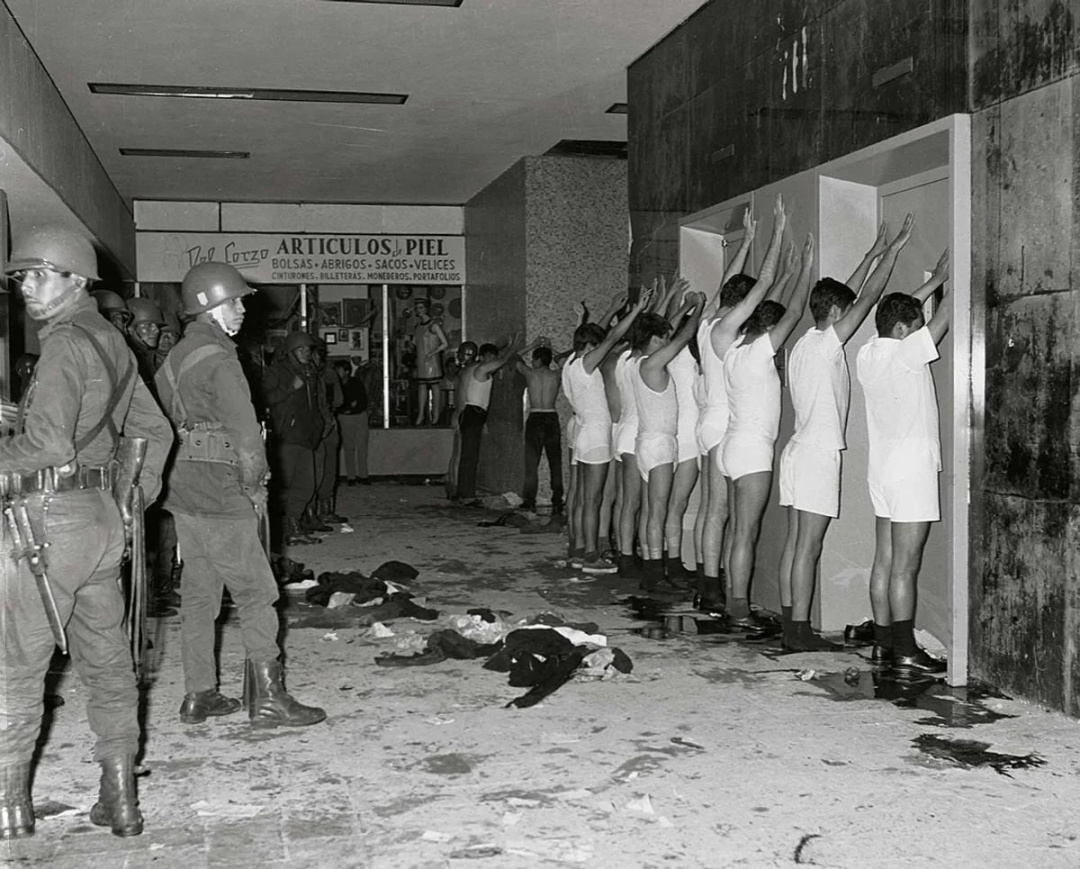
Recent declassified documents indicate that the Central Intelligence Agency (CIA) provided financial support to right-wing student organizations in Mexico just before the Tlatelolco massacre in 1968. Despite the years that have passed, the agency continues to withhold critical information regarding its operations during this tumultuous period in Mexican history.
The CIA executed at least five initiatives over two decades aimed at influencing student leadership within Mexican universities and infiltrating political entities such as the Institutional Revolutionary Party (PRI) and the National Federation of Technical Students. This information comes from an analysis conducted by the National Security Archive, an independent research center in Washington, which reviewed official documents related to CIA activities.
Claire Dorfman and Arturo Jiménez-Bacardí, researchers at the Archive, noted that the CIA's involvement may have significantly polarized student politics in Mexico. They suggest that the agency's close ties with figures like Fernando Gutiérrez Barrios and Miguel Nazar Haro could imply a more direct role in the violence that occurred during the Tlatelolco incident.
The CIA's historical records reveal that its support for right-wing groups dates back to the 1950s. For instance, the agency was involved in the ousting of UNAM rector Luis Garrido Díaz in 1952 and later funded organizations such as the Institute of Social and Economic Research (IISE) and the University Movement of Renewing Orientation (MURO), which were known for their anti-communist stance.
CIA Concerns Over Political Violence
Internal assessments from the CIA indicated that some officials were concerned about the implications of supporting groups like MURO, which engaged in militant actions against leftist organizations. In 1967, U.S. Ambassador to Mexico and CIA evaluators expressed doubts about the long-term consequences of empowering such groups, with one expert recommending the cessation of support for MURO due to its role in escalating political violence.
Despite these concerns, CIA backing for MURO persisted into the 1970s. The agency collaborated with the Mexican government to mobilize students for demonstrations against the Soviet embassy in 1969, showcasing the extent of its involvement in Mexican political affairs.
Approved for Dissemination
The recently declassified documents also shed light on Nazar Haro, who was recruited by the CIA and later became a prominent figure in the Federal Security Directorate (DFS). Haro's role in intelligence operations against student groups leading up to the Tlatelolco massacre remains largely obscured in the released documents, with many details still classified.
As the anniversary of the Tlatelolco massacre approaches, the National Security Archive has called for the CIA to release an unredacted version of its historical activities in Mexico, emphasizing the need for transparency regarding the agency's past actions in the region.