Former CIA Official Pleads Guilty to Fraud Scheme Involving $200 Million
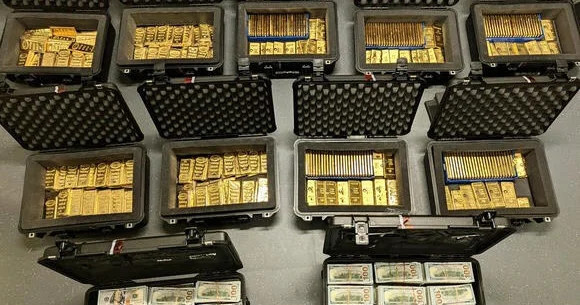
David Rush, a former CIA official, pleaded guilty in federal court on Tuesday to a single count of wire fraud. This plea follows his admission of inventing fake classified programs to misappropriate nearly $200 million in government funds, which he used to purchase luxury properties and gold bars in Florida. Rush's guilty plea was part of a broader investigation that revealed he had $40 million in gold bars at his residence when arrested in May.
As part of his plea agreement, Rush has consented to forfeit at least $194 million in assets. This includes 298 gold bars, two luxury BMWs, 35 high-end watches, and four homes located in Florida. He now faces a maximum sentence of 20 years in prison for his actions.
According to prosecutors, Rush devised a scheme that involved creating a fictitious classified program to funnel $145 million through a front company. He intended to resell the properties he acquired for profit. Additionally, he fabricated another purported sensitive government activity to justify the acquisition of gold bars. The prosecution's filing indicated that Rush exercised control over the assets acquired through these fraudulent activities.
Rush had access to highly sensitive government programs, although the specific agency was not named in the court documents. The investigation began when the CIA referred the matter to the FBI. The affidavit supporting the criminal complaint described Rush as a former Senior Executive Service level employee at a government agency in Virginia.
Details of Fraudulent Transactions Exposed
The fraudulent activities included instructing an unidentified contractor to transfer approximately $145 million to a holding company he controlled. He then directed employees to route these funds to purchase four properties in Palm Beach and Hobe Sound, Florida. When FBI agents executed a search warrant at his home, they discovered not only the gold bars but also $2 million in cash and various luxury watches.
Rush's initial charges included stealing public money, with allegations that he provided false information regarding his education and military service on his government application. In June, a federal judge determined that Rush posed a severe flight risk, leading to his continued detention as the case progressed. Prosecutors characterized him as a "master manipulator" who misled those around him about his background and leveraged his position for personal gain.
Case Closed
The fraudulent scheme orchestrated by Rush involved multiple layers of deception. He misled contractors into believing he was engaged in a top-secret project requiring high-value commodities. This manipulation led to a contractor wiring $45 million to the holding company he controlled, which was a key transaction in the wire fraud charge against him. Rush's actions not only undermined the integrity of government operations but also highlighted vulnerabilities within the oversight of classified programs.
As Rush awaits sentencing, the implications of his actions resonate beyond his personal consequences. The case raises critical questions about the oversight of classified programs and the potential for abuse by individuals in positions of trust. The legal proceedings against Rush serve as a reminder of the importance of accountability within government agencies and the need for robust mechanisms to prevent similar fraud in the future.