Deutsche Telekom CEO Projects Over €1 Billion in AI Revenues by 2030
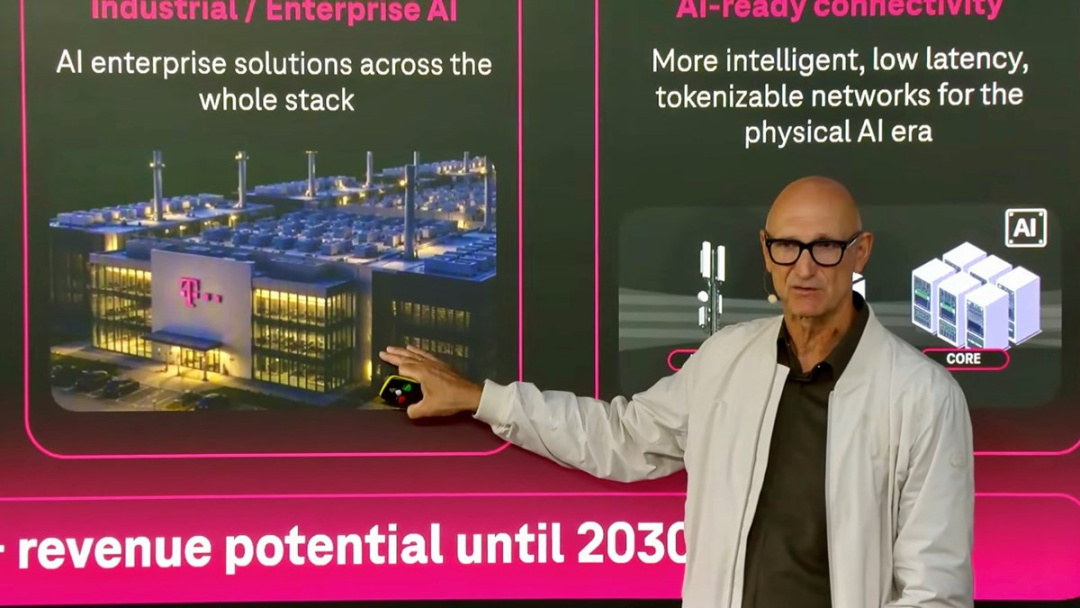
Deutsche Telekom's CEO Tim Höttges recently addressed the company's inaugural AI Investor Day, where he emphasized the potential for significant revenue growth from AI initiatives. Höttges projected that Deutsche Telekom could generate over €1 billion in AI-related revenues outside the United States by 2030, a figure he described as conservative. The company is already seeing revenue from AI services aimed at its B2B customers, which is expected to rise from €250 million this year to €800 million by 2030.
Höttges elaborated on the broader opportunities for AI-related service revenues, suggesting that the actual figures could surpass the €1 billion mark. He stated, "€1 billion in extra revenue [outside the US by 2030] is something we have in mind. To be honest, this is a conservative number. I do not want to commit to a bigger number because you will not believe it. So we go with €1 billion, but our internal planning is much more optimistic."
The CEO also highlighted the potential for consumer AI revenues, estimating that these could exceed €200 million by 2030. This projection was confirmed by Deutsche Telekom's media relations team, indicating that Höttges had set ambitious targets for the business-to-consumer segment during his presentation.
Höttges envisions a future where AI fundamentally changes how consumers interact with technology, likening it to a new "iPhone moment". He anticipates a shift towards voice-native devices that will replace traditional smartphones, allowing users to manage their lives more intuitively. He remarked, "The future will be voice-native, and there will be a moment where a new device is coming where you have an iPhone moment and you say, 'I do not need this smartphone anymore.'"
In addition to revenue generation, Deutsche Telekom is also focusing on efficiency improvements through AI. The company forecasts gross savings of approximately €1.1 billion by 2027, increasing to €2.5 billion by 2030, compared to 2023 figures. Höttges noted that these savings projections have been revised upward from previous estimates.
Höttges has been at the forefront of Deutsche Telekom's AI initiatives since 2020, overseeing around 500 AI projects currently in development. He pointed to the establishment of an AI factory in Munich and emphasized the importance of sovereign AI in Europe as a significant business opportunity.
Höttges' Vision for AI Integration
Despite these ambitious plans, Höttges clarified that Deutsche Telekom does not aim to become an AI company. Instead, he stated, "We want to stay a human-led company. We want to enable AI for our customers and make their life as easy as possible."
As the telecommunications industry increasingly embraces AI, Höttges remains optimistic about the role of telcos in future AI infrastructure. He believes that the networks will be essential for the functionality of AI applications, asserting that AI capabilities will be integrated throughout the telecom infrastructure.
Höttges concluded by acknowledging the complexities and challenges posed by AI, but he remains committed to positioning Deutsche Telekom as a leading AI telco with a robust AI network. He also mentioned the importance of safety measures, suggesting that a "kill switch for every AI [workflow] sits in the network. If we’re switching off the network… there’s nothing happening."
Final Assessment
As Deutsche Telekom continues to innovate in the AI space, the company is poised to leverage its network capabilities to enhance AI functionalities. Höttges' vision reflects a broader trend within the telecommunications sector, where companies are increasingly focused on harnessing AI to drive growth and improve operational efficiency. The future of telecommunications may very well hinge on how effectively these companies can integrate AI into their services and infrastructure.
In summary, Deutsche Telekom's strategic focus on AI presents significant opportunities for revenue growth and operational efficiency. With ambitious targets set for the coming years, the company is positioning itself as a key player in the evolving landscape of AI-driven telecommunications. As the industry adapts to these changes, the potential for innovation and transformation remains vast.