Nigeria's Football Management Crisis Poses National Security Risks
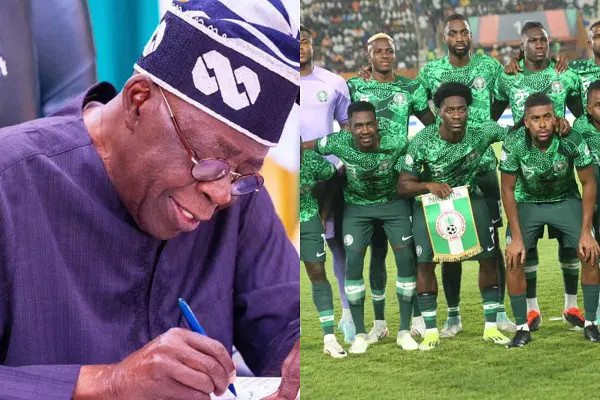
The ongoing 2026 FIFA World Cup has sparked discussions about the state of football in Nigeria, particularly in light of the Super Eagles' absence from the tournament. This absence is not merely a sporting disappointment; it raises concerns about national unity and security. Football has historically served as a unifying force in Nigeria, bridging ethnic divides and providing a sense of national pride. The Super Eagles' participation in international competitions has often rallied the nation together, offering a temporary escape from socio-economic challenges.
Despite the Super Eagles not qualifying for the World Cup, Nigerian fans remain engaged, watching matches late into the night. This dedication underscores the sport's significance in the country, where football is regarded as the king of sports. The passion displayed by fans illustrates how football can foster unity among diverse groups, transcending political and ethnic divisions. Adebayo Abubakar, writing for The Cable, notes that football allows Nigerians to momentarily set aside pressing issues like economic hardship and political strife, creating a sense of collective identity.
Historically, football has played a crucial role in Nigeria's social fabric. During the Nigerian Civil War, for instance, the legendary Brazilian player Pelé's visit to Nigeria led to a temporary ceasefire as soldiers from opposing sides gathered to listen to radio broadcasts of his matches. This anecdote highlights football's unique ability to bring people together, even in the most challenging circumstances.
Segun Odegbami, a former captain of the Super Eagles, has long advocated for the sport's potential to heal divisions and promote national reconciliation. He recalls how the establishment of Enugu Rangers after the civil war served as a symbol of unity for the Igbo people, demonstrating football's capacity to foster hope and healing.
However, the current state of Nigerian football raises serious questions about the effectiveness of its management. The Nigeria Football Federation (NFF) has faced criticism for its inability to capitalize on the country's rich footballing talent. Despite producing numerous stars and winning various accolades, Nigeria has failed to qualify for the World Cup twice in a row, a situation described by Mikel Obi as a 'hammer blow' to the nation. Obi argues that the NFF board must undergo significant changes to address the systemic issues plaguing Nigerian football.
The implications of Nigeria's absence from the World Cup extend beyond sports. The economic impact is substantial, affecting businesses that thrive on football-related activities. From sports journalists to advertisers and local pubs, many stakeholders are counting losses due to the Super Eagles' failure to qualify. Additionally, the potential financial gains from advancing in the tournament, such as FIFA's prize money, highlight the economic stakes involved.
Football also serves as a vital tool for international diplomacy. Countries that participate in global tournaments often gain visibility and recognition that can enhance their international standing. Nigeria's absence from the World Cup diminishes its opportunity to showcase its culture and talent on a global stage.
As the NFF prepares for elections in September, there is a growing consensus that the current leadership must be replaced to revitalize Nigerian football. Stakeholders are calling for immediate reforms to ensure that the sport can fulfill its potential as a unifying force and a source of national pride. The government, particularly President Tinubu, is urged to take a more active role in addressing the challenges facing Nigerian football. Without significant changes, the hopes of millions of Nigerians may remain unfulfilled, and the broader implications for national unity and security could be profound.