Analysis of Cocaine Trafficking Through Rotterdam and Le Havre
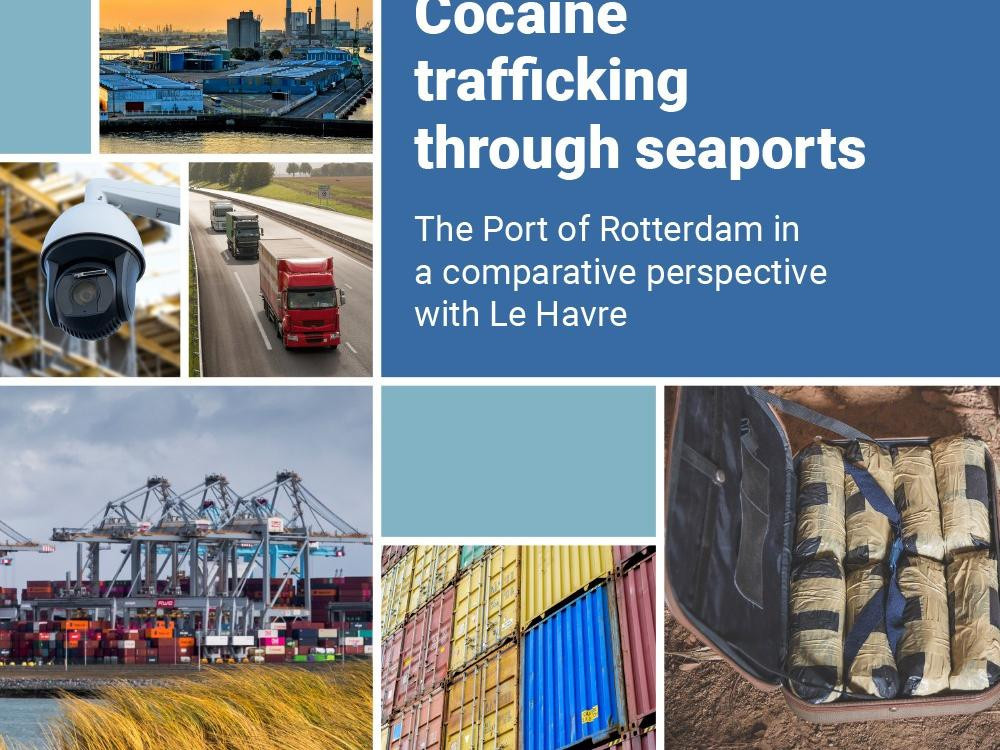
This report examines cocaine trafficking through the Port of Rotterdam in comparison with Le Havre. It finds that criminal networks are shifting from traditional extraction methods to smaller shipments, cover cargo, peripheral logistics nodes, and digital manipulation. The study highlights corruption as a structural vulnerability and calls for coordinated European action, stronger digital security, intelligence sharing, and resilience-building.
Europe's largest seaports are designed to move goods quickly and efficiently at immense scale. However, these strengths can be exploited by criminal networks that utilize port facilities and logistics systems to support increasingly adaptive and technologically sophisticated cocaine trafficking operations.
The report analyzes how cocaine trafficking operates through the Port of Rotterdam and compares its vulnerabilities and responses with those identified in a parallel case study of the Port of Le Havre. Drawing on a targeted literature review and interviews with stakeholders involved in port security, logistics, and enforcement, the study examines the modus operandi, criminal actors, and governance challenges that shape cocaine trafficking through one of Europe's largest maritime gateways.
Trafficking through Rotterdam has evolved in response to tighter physical security and digital container-release reforms. As traditional rip-on/rip-off methods have declined, criminal networks have shifted towards smaller shipments, cover cargo, reefer containers, peripheral logistics nodes, and manipulation of digital systems. Corruption remains a structural enabler, but its form differs between Rotterdam and Le Havre: Rotterdam faces distributed vulnerabilities across technical, logistical, and IT roles, while Le Havre's labor-controlled structure creates concentrated risks around docker access and coercion.
Challenges in Disrupting Trafficking Networks
The comparison shows that enforcement alone is insufficient to disrupt trafficking networks that operate across the Northern Range as an integrated corridor. Effective responses require coordinated European action, harmonized digital security standards, cross-border intelligence sharing, stronger oversight of high-risk roles and logistics nodes, and prevention efforts that build resilience among port workers and communities vulnerable to criminal recruitment.
In Rotterdam, traditional rip-on/rip-off extraction has become less common as physical security and digital release systems have improved. Criminal networks increasingly use cover cargo, reefer containers, empty depots, smaller fragmented shipments, and inland logistics hubs to facilitate their operations.
Filed & Cleared
Both Rotterdam and Le Havre demonstrate that insider assistance is fundamental to cocaine trafficking, but also that corruption takes different forms depending on a port's structure, labor arrangements, and local culture. In Rotterdam, corruption risks are distributed across terminal, logistics, maintenance, and IT roles. In Le Havre, the docker workforce's control over container movement creates a more concentrated point of leverage.
Rotterdam's experiences with multi-agency cooperation, public-private information sharing, physical security reforms, and resilience programs illustrate how layered governance can reduce specific vulnerabilities. However, traffickers adapt quickly and shift between ports, hinterland routes, and secondary logistics nodes. European ports therefore need to work towards harmonized digital security, intelligence sharing, and coordinated action against networks rather than isolated enforcement.