US Spy Satellite FARRAH III Breaks Apart After 38 Years in Orbit
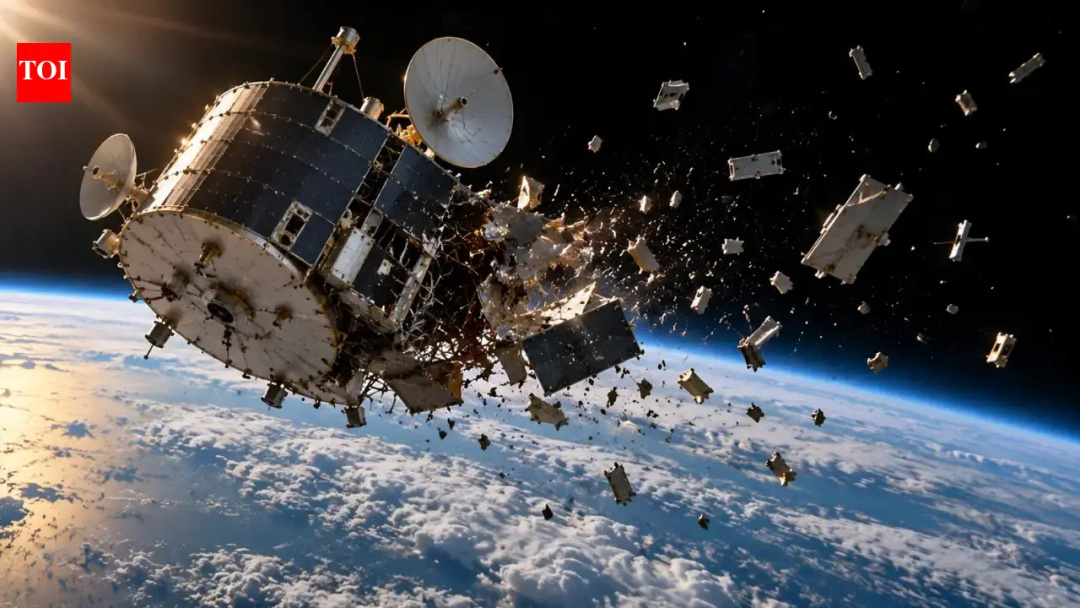
A US Cold War-era spy satellite, known as FARRAH III, has broken apart in low Earth orbit after nearly four decades of operation. Launched on September 5, 1988, the satellite was part of a National Reconnaissance Office program aimed at collecting electronic intelligence, particularly monitoring Soviet radar systems. The fragmentation occurred on September 13, 2026, at an altitude of about 775 kilometers, as confirmed by the US Space Forces-Space, although the cause of the breakup has not been disclosed.
FARRAH III, catalogued as USA 32, was designed to detect and analyze radio-frequency emissions across a wide range of frequencies. It was equipped with advanced technology, including a tactical onboard processor that allowed it to transmit data directly to various military users, including ground stations and aircraft. This satellite was part of a series named after actresses to maintain secrecy about their missions, with FARRAH reportedly referring to Farrah Fawcett.
Despite being designed for a nominal lifespan of three years, FARRAH III remained operational for much longer, with reports indicating it was still functioning as recently as 2021. The breakup has resulted in additional debris that must now be tracked, as objects at this altitude can remain in orbit for extended periods due to minimal atmospheric drag. The US Space Forces-Space has stated that all tracked debris will be included in routine conjunction assessments for spaceflight safety.
Cleared for Release
The cause of the satellite's fragmentation is still under investigation. Analysts have suggested several possibilities, including the failure of aging components or a potential collision with other debris. However, there is no evidence to suggest that the satellite was deliberately destroyed or impacted by an anti-satellite weapon. The breakup of FARRAH III adds to the increasing concerns regarding space debris and the safety of satellite operations in low Earth orbit.
As the satellite's fragments continue to disperse, the implications for space traffic management and the safety of other operational satellites become more significant. The legacy of FARRAH III, which outlived its intended mission duration, highlights the challenges and risks associated with aging space technology in an increasingly crowded orbital environment.