Canada and Europe Navigate Space Sovereignty and Secure Infrastructure
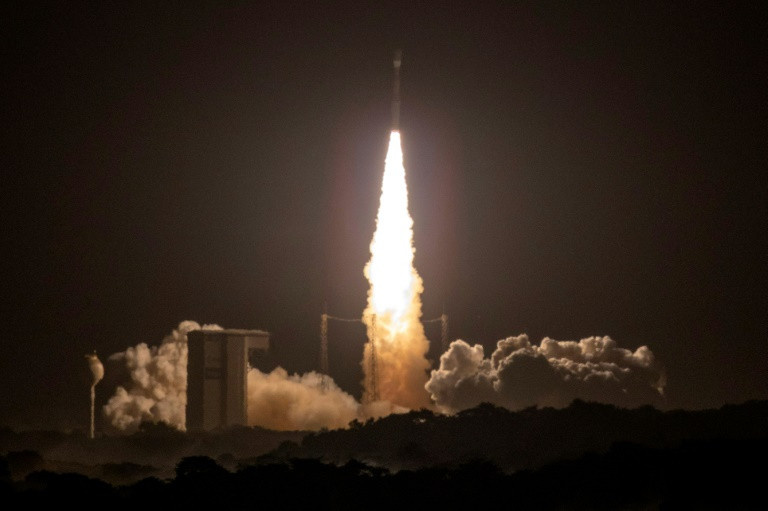
Space has transformed from a realm of exploration to a strategic layer essential for national security, climate monitoring, telecommunications, and economic competitiveness. In this context, Canada and Europe are grappling with the question of how much space capability should be sovereign versus outsourced to allies or commercial entities. Europe is increasingly focused on strategic autonomy, exemplified by its IRIS² program, which aims to create a secure satellite communications constellation to enhance connectivity for governments and businesses by around 2030. This follows earlier initiatives like Galileo for navigation and Copernicus for Earth observation.
Canada's approach, while more selective, is equally significant. Rather than replicating Europe's extensive programs, Canada concentrates on areas where it excels, such as robotics, Earth observation, and satellite communications. The Canadian Space Agency reports that the domestic space industry generates $5.1 billion in revenues and contributes $3.4 billion to the GDP, with satellite communications being the largest revenue source.
When comparing the two, Europe benefits from scale and institutional depth, while Canada offers agility and niche technological leadership, particularly in the Arctic. Both regions recognize that sovereignty in space extends beyond satellite ownership to include control over data pathways, ground systems, launch access, cybersecurity, and industrial supply chains.
Europe's space sector is among the most advanced globally, with the EU touting Galileo as the most accurate civilian satellite navigation system and Copernicus as a leading Earth observation provider. In 2024, the European space industry generated €8.8 billion in sales and employed nearly 66,000 people. However, fragmentation remains a challenge, as highlighted by the Centre for European Policy Studies, which points to a capable but dispersed ecosystem hindered by institutional complexity and underdeveloped private capital markets.
The IRIS² initiative aims to address these issues by providing secure governmental communications and broadband services, with a budget of €10.6 billion over 12 years, funded by the EU, ESA, and private sector contributions. Yet, concerns arise regarding Europe's reliance on optical communications, as companies like Astrolight warn that without scaling this technology, Europe risks dependence on systems like Starlink. Optical communications can offer data transmission rates significantly higher than traditional radio frequency links, enhancing security and reducing vulnerability to interference.
Canada's space sector, while smaller, has established international credibility through mission-critical technologies such as the Canadarm and RADARSAT. The Canadian Space Agency emphasizes space as a strategic national asset, particularly for providing connectivity to rural and remote communities. The government has allocated $1.012 billion for the RADARSAT+ initiative to maintain access to vital radar data for climate monitoring and security.
The challenges faced by Canada differ from those of Europe. While Europe seeks geopolitical autonomy from foreign suppliers, Canada must address its geographic challenges, relying on space-based connectivity to serve its vast northern territories. The Canadian space strategy highlights low Earth orbit satellite systems as a means to enhance broadband access in remote areas, paralleling Europe's focus on secure communications.
Both Canada and Europe recognize the importance of secure connectivity for defense, disaster response, and economic inclusion. This shared understanding underscores the dual-use nature of space technologies, where civil applications also support military needs. The convergence of technology in areas like optical communications, AI, and quantum-secure communications is evident in both ecosystems, with the EU planning to integrate quantum cryptography into its IRIS² framework.
Canada has the opportunity to leverage its strengths in AI, quantum science, and robotics to develop a cohesive sovereign space technology strategy. Analysts suggest that Canada could significantly expand its space economy by 2035, but this will require increased investment and a unified national approach.
The institutional scale presents a key divergence: Europe has a complex network of agencies and programs, while Canada can operate with more focus and agility. Europe aims to rebuild its industrial competitiveness against larger players, while Canada seeks to ensure its niche capabilities are not overshadowed. The strategic question for Europe is whether it can create a sovereign alternative to Starlink, while Canada must determine how to build sufficient sovereign capabilities while remaining integrated with allied systems.
Optical communications represent another area of divergence. Europe is already prioritizing this technology as part of its strategic infrastructure, while Canada has yet to fully incorporate it into its public policy framework. For Canada, developing secure laser communications could be crucial for Arctic connectivity and defense networks.
Ultimately, Canada and Europe are not competing on equal footing. Europe is constructing large-scale infrastructure, while Canada is focusing on specialized capabilities through targeted investments. Both, however, face a common challenge: the next phase of space sovereignty will hinge on secure, high-capacity data movement, necessitating a robust communications architecture that connects satellites, ground stations, and users effectively. The evolution of optical connectivity will likely play a pivotal role in distinguishing future-ready space systems from legacy ones.