Cuba Celebrates Neighborhood Spy Program at New York Event
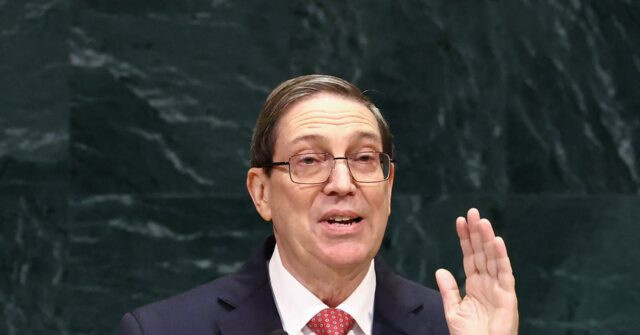
The Cuban mission to the United Nations held an event in New York City on Sunday to celebrate the anniversary of the Committees for the Defense of the Revolution (CDRs). These local organizations function as terror cells and spy networks, designed to infiltrate and intimidate Cubans at the neighborhood level. Cuban Foreign Minister Bruno Rodríguez, who was in New York for the United Nations General Assembly, expressed pride in hosting such an event in the United States, stating online that it reaffirmed their commitment to defending the Fatherland, the Revolution, and Socialism.
The CDRs are unique to Cuba, with no equivalent in the United States. Each neighborhood has a designated representative tasked with spying on residents and reporting any dissent to the Communist Party. This system is integral to the regime's strategy of maintaining control and suppressing opposition. Rodríguez's remarks underscored the stark contrast between the Cuban government's practices and the values espoused in democratic nations.
During the event, Cuban state media reported that participants condemned U.S. efforts to highlight Cuba's human rights abuses and the regime's history of espionage. The gathering was described as a reaffirmation of Cuba's sovereignty and its right to determine its future without external interference. The CDRs were portrayed as vital to connecting national policy with the daily lives of citizens, despite their notorious reputation for instilling fear among the populace.
Cuba's Historical Use of International Platforms
Historically, the Cuban delegation has used the U.N. General Assembly as a platform for propaganda. In past years, they have engaged in disruptive behavior during speeches that criticize the regime. For instance, during President Donald Trump's address, the Cuban delegation walked out in protest. The CDRs, which were established under Fidel Castro, have been responsible for monitoring citizens and reporting on their activities, often leading to severe repercussions for those deemed insufficiently loyal.
Cleared for Release
The current leader of the CDR program, Gerardo Hernández Nordelo, who gained notoriety as part of the Cuban Five, celebrated the event with a cake, a stark contrast to the poverty faced by many Cubans. Hernández was convicted for his role in espionage activities that resulted in the deaths of Americans and was later released by President Obama in a controversial deal. His leadership of the CDRs highlights the regime's ongoing reliance on surveillance and intimidation to maintain power.
The event in New York served as a reminder of the Cuban government's tactics and the lengths to which it will go to promote its narrative abroad. As Cuba continues to face international scrutiny for its human rights record, the CDRs remain a symbol of the regime's oppressive methods and its commitment to suppressing dissent.