Canada's Intelligence Operations in Cuba: A Historical Overview
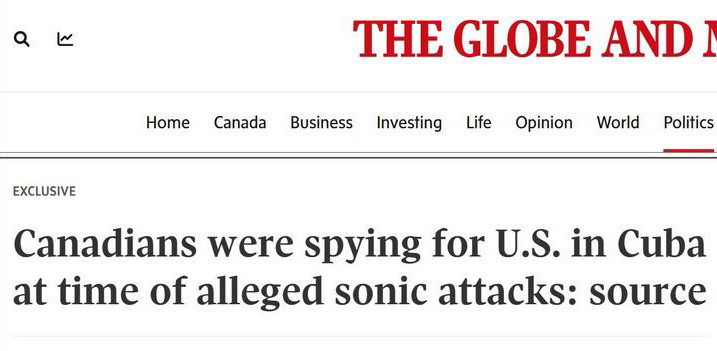
Recent reports have confirmed Canada's extensive involvement in intelligence operations concerning Cuba, particularly in collaboration with the United States. The Globe and Mail revealed that Canadian diplomats have been sharing intelligence with American counterparts in Havana, especially during the time of alleged sonic attacks that affected officials from both nations. These attacks, linked to Russia, prompted Canadian diplomats to utilize satellite equipment provided by the US to gather crucial information.
The history of Canadian espionage in Cuba dates back to the Cuban revolution in 1959. Washington's requests for Canadian intelligence support were significant enough that Ottawa maintained diplomatic relations with Havana, contrary to the US's expectations. Documents declassified from the State Department indicate that the US encouraged Canada to keep its ties with Cuba, believing that Canada could effectively gather intelligence on the island due to its unique position.
During the Cuban Missile Crisis in 1962, Canadian intelligence played a vital role. The Communications Security Establishment (CSE), akin to the US NSA, intercepted communications from Cuban leaders, providing the US with critical information about Soviet military activities. Canadian diplomats were among the first to alert the US about incoming Soviet arms, showcasing the depth of cooperation between the two nations.
In a secret agreement reached between Prime Minister Lester Pearson and President John F. Kennedy, Canadian diplomats were authorized to act as CIA operatives. This arrangement allowed them to conduct reconnaissance missions across Cuba, gathering intelligence on Soviet military installations and activities. Reports generated from these missions were securely transmitted to the US State Department, emphasizing the trust placed in Canada as an intelligence partner.
Canada's Evolving Role in US Intelligence
The ongoing relationship between Canada and the US regarding intelligence operations raises questions about the implications of such cooperation in the current political climate. As the Trump administration continues its efforts to exert pressure on Cuba, the historical context of Canadian espionage may provide insights into the strategies employed by both nations in their dealings with Havana.
The longstanding partnership between Canada and the US in intelligence sharing has been shaped by various geopolitical events. The collaboration during the Cuban Missile Crisis is just one example of how Canada has provided valuable military intelligence to the US. Over the years, Canadian intelligence agencies have been instrumental in monitoring developments in Cuba, often acting as a bridge between the US and Cuban officials.
Intelligence Reviewed
As the political landscape evolves, the role of Canadian intelligence in US-Cuba relations remains a topic of interest. The complexities of this relationship highlight the intricate balance between diplomacy and espionage, raising important questions about the future of intelligence operations in the region.
The historical involvement of Canada in US intelligence operations against Cuba underscores the ongoing dynamics of power and influence in the region. As the US continues to navigate its relationship with Cuba, the insights gained from Canadian intelligence operations may play a crucial role in shaping future policies. Understanding the past can provide valuable lessons for both nations as they address the challenges and opportunities that lie ahead.