Vermont Man Convicted in Shooting of Palestinian College Students
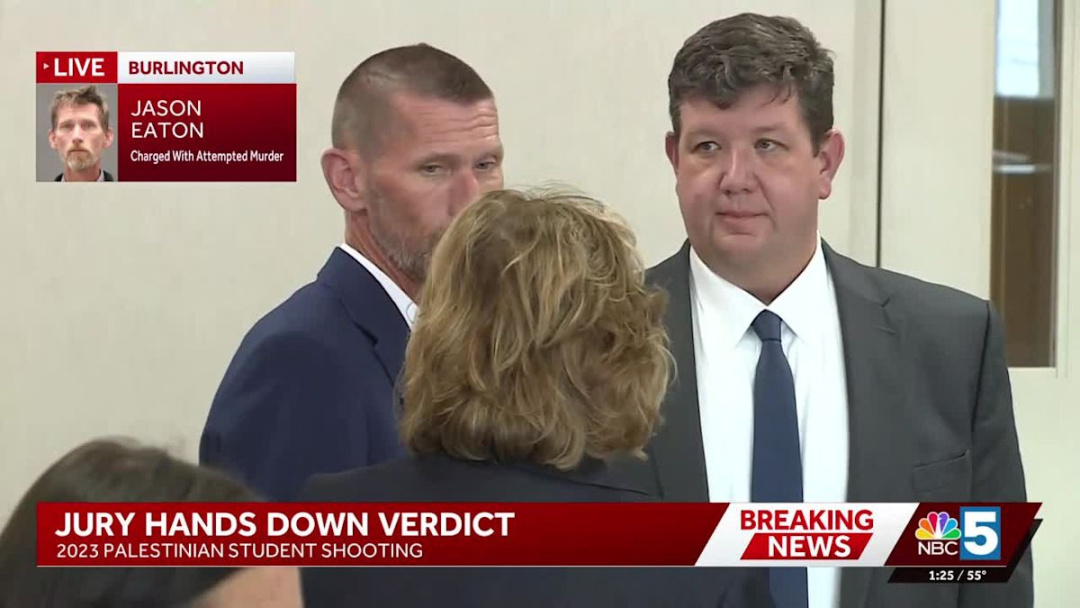
A jury in Burlington, Vermont, has found Jason Eaton guilty of attempted murder in the shooting of three Palestinian college students. The jury reached its verdict after deliberating for several hours, rejecting Eaton's insanity defense that he was acting on orders from the CIA and Mossad. The incident occurred in November 2023, leaving one of the students, Hisham Awartani, paralyzed from the waist down, while his friends, Tahseen Aliahmad and Kinnan Abdalhamid, were also injured.
The three men were visiting Awartani's grandmother for Thanksgiving when the shooting took place. They were walking near the University of Vermont campus, conversing in a mix of English and Arabic, and wearing traditional Palestinian keffiyehs. During the trial, the jury heard testimonies from the victims, who described the sudden violence that disrupted their evening.
Eaton, 51, showed little emotion as the verdict was read. He faces a potential life sentence for his actions. The trial included expert testimony regarding Eaton's mental health, with defense attorneys arguing that he had a history of mental illness, including diagnoses of bipolar disorder and PTSD. However, the prosecution contended that Eaton was aware of his actions and had a grandiose sense of self-importance.
Motivations Behind the Shooting Examined
The shooting, which occurred shortly after the onset of the Israel-Hamas conflict, sparked discussions about hate crimes and the motivations behind Eaton's actions. Prosecutor Sarah George emphasized that Eaton's statements indicated a clear understanding of his actions, countering the defense's claims of insanity. After the verdict, Awartani's mother expressed that while the verdict could not erase the trauma, it affirmed Eaton's responsibility for the attack.
Cleared to File
Eaton's defense claimed that he received messages from the CIA and Mossad via FM radio, urging him to act. However, the prosecution argued that he was simply a narcissist lacking empathy. The case has raised significant concerns about the implications of hate and violence in the current socio-political climate, particularly regarding the treatment of Palestinian individuals in the U.S.
As the community reflects on the verdict, the incident has underscored the need for ongoing discussions about hate crimes and the responsibilities of individuals in a diverse society. The trial has not only highlighted the personal impact on the victims but also the broader societal issues surrounding prejudice and violence.