Trump Proposes Militarized Triumphal Arch Amid National Security Claims
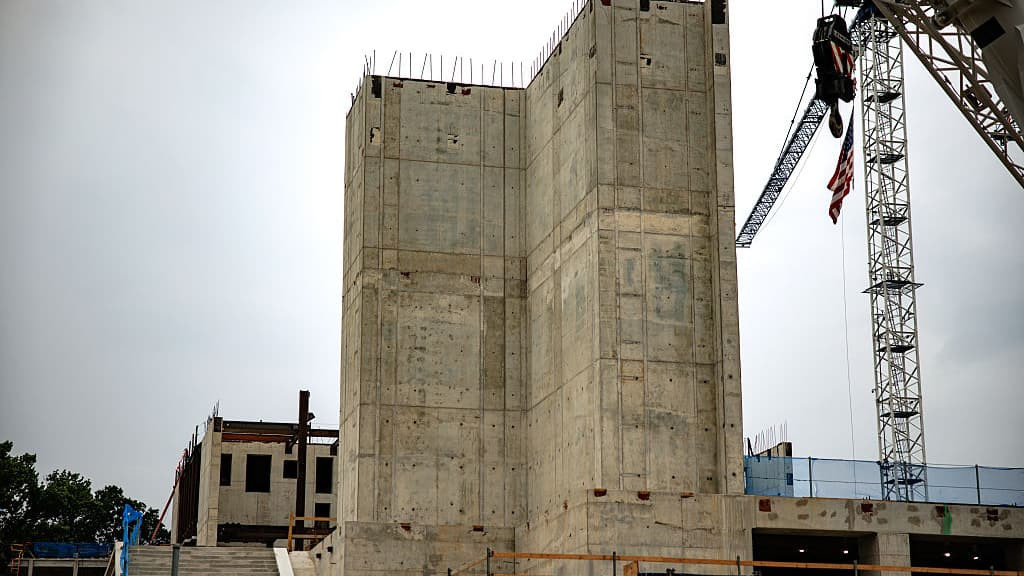
President Donald Trump has unveiled plans for a new triumphal arch, set to be constructed at Memorial Circle near Arlington Memorial Bridge in Washington, D.C. This structure is proposed to function as a military complex, incorporating facilities for drones, ammunition storage, and sniper positions. Trump emphasized the uniqueness of this project, stating it would be unparalleled globally and would enhance national security.
The announcement follows the initial reveal of a model for the 250-foot arch in October 2025, which was originally presented as a commemoration of America's 250th anniversary. Trump has argued that the arch is essential for placing Washington, D.C. on par with other major world capitals that feature similar monuments. He noted that Washington is the only major city without a triumphal arch, asserting that this project would rectify that.
Trump's recent statements suggest that modifications to the arch's design were made at the request of the U.S. Military for national security reasons. However, the specifics of how this militarized structure would contribute to security in the capital remain unclear, and no revised plans have been publicly shared.
The proposal has faced scrutiny, echoing the administration's defense of the White House ballroom project, which was initially described as a venue for state functions but later characterized as part of a military complex. Legal challenges have emerged regarding the ballroom, with claims that it requires congressional authorization to proceed. Similar concerns have been raised about the triumphal arch, with critics labeling it a vanity project and questioning its necessity amid ongoing economic challenges for many Americans.
Veterans Challenge Arch's Legality
A group of Vietnam War veterans has filed a lawsuit to block the arch's construction, arguing it would disrupt historic sightlines in the capital. They contend that the project lacks congressional approval and is therefore unlawful. Legal experts have noted that the distinction between a project deemed essential for national security and one that is not can significantly impact congressional authority.
Historically, administrations have leveraged national security claims to expand presidential powers, often resulting in limited congressional oversight. Legal scholars have pointed out that such claims can lead to a concentration of power in the executive branch, raising concerns about accountability.
Intelligence Reviewed
As the legal battle over the arch unfolds, the administration has yet to clarify the military rationale behind the project. The National Park Service has acknowledged that the arch's construction will adversely affect historic sites, yet insists that its location is crucial to the project. The ongoing litigation and public debate surrounding the arch reflect broader tensions regarding the intersection of national security, public infrastructure, and legal authority.
The outcome of this proposal may set a precedent for how future projects are justified under the guise of national security, potentially reshaping the balance of power between the presidency and Congress.