U.S. and Japan Conduct Bilateral Engagement to Enhance Military Cooperation
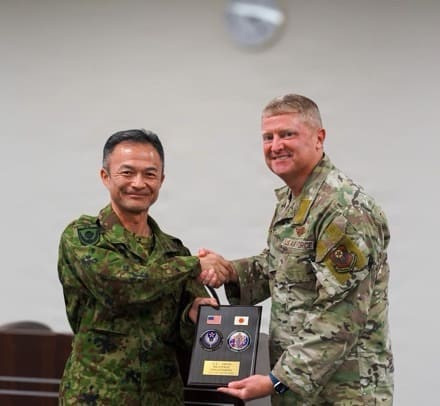
U.S. service members assigned to Air Force Special Operations Command and U.S. Special Operations Command Pacific, alongside the Japan Ground Self-Defense Force, conducted a bilateral engagement at Camp Kisarazu, Japan, from August 24 to 28, 2026. This event reinforced the enduring alliance between the U.S. and Japan, focusing on interoperability and collaborative capabilities.
The five-day engagement included briefings, discussions, and working groups that centered on air-to-ground integration and humanitarian assistance in a joint operational environment. By synchronizing their capabilities, U.S. special operations forces and the Japan Ground Self-Defense Force aim to ensure effective collaboration during crisis response and sustained regional operations.
Brig. Gen. Clay Freeman, deputy commander of AFSOC, emphasized the importance of this engagement in building partnerships. He stated that by integrating air-to-ground capabilities and aligning disaster response frameworks, the U.S. and Japan can respond cohesively to any crisis in the Pacific. Future international seminars are planned to further solidify this foundation and enhance regional security.
The engagement also laid the groundwork for a Building Partner Aviation Capacity Seminar, which will be co-hosted in Japan at a later date. This seminar will provide a platform for AFSOC and U.S. Special Operations Command to facilitate communication with key regional allies in the Pacific Command region.
Key Leadership Insights on Military Integration
Col. Matthew Taylor, deputy commander of the 353rd Special Operations Wing, served as a senior mentor during the bilateral engagement. He guided working groups through joint planning and problem-solving frameworks to address specific challenges in communications, logistics, and command and control.
Taylor noted that integration with Japanese partners is both a tactical and strategic imperative. This engagement allows the 353rd Special Operations Wing and the Japan Ground Self-Defense Force to focus on the mechanics of air-to-ground integration, maximizing interoperability during bilateral activities to support both nations' security interests.
Final Assessment
Representatives from the Japan Ground Self-Defense Force highlighted that the exchange successfully strengthened tactical coordination, paving the way for more integrated operations during future missions. Maj. Gen. Yoshichika Ito, commander of the 1st Helicopter Brigade, remarked that the event enhanced mutual understanding and built a strong foundation of trust, looking forward to further strengthening the partnership for regional stability and security.
The collaboration in Japan underscores the ongoing cooperation within the U.S.-Japan alliance, demonstrating a shared commitment to regional security and mutual defense capabilities.