US Treasury Sanctions VTB Bank for Evasion of Iranian Sanctions
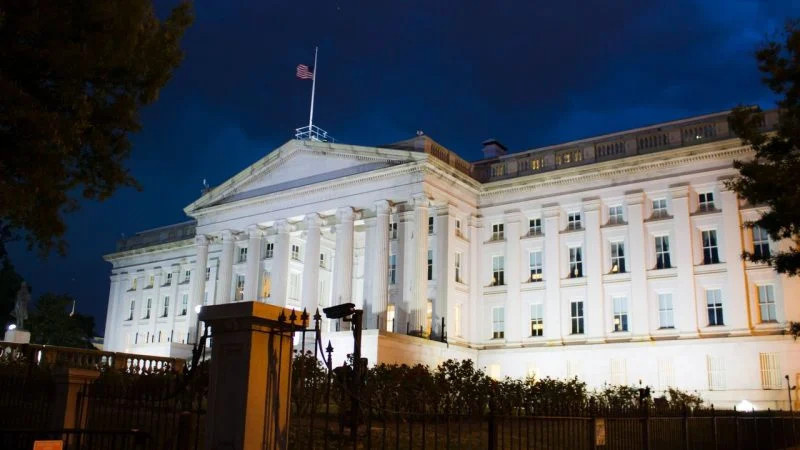
The US Treasury’s Office of Foreign Assets Control (OFAC) has officially designated VTB Bank, Russia’s second-largest financial institution, under Executive Order 13902 for its role in facilitating Iranian sanctions evasion. This significant move adds new restrictions on top of the existing penalties that have been imposed on the state-owned bank, effectively severing any remaining financial ties VTB may have had with the global dollar system.
The designation, which was made on September 9, places VTB on the Specially Designated Nationals and Blocked Persons (SDN) List. This action triggers a full asset freeze on any property under US jurisdiction and prohibits American persons or entities from engaging in transactions with the bank. Notably, the announcement did not include any general licenses or exceptions, indicating a strict approach by the Treasury.
This action against VTB is part of a larger initiative by the Treasury known as “Operation Economic Outcast,” which aims to target financial networks that allow Iran to bypass international sanctions. This operation has also seen simultaneous sanctions imposed on a Turkish bank and Iranian airlines, demonstrating a comprehensive strategy by Washington to address sanctions evasion across multiple jurisdictions and sectors.
The charge of Iranian sanctions evasion adds a new legal basis for sanctioning VTB, which already faced a multitude of US restrictions. The bank first came under OFAC scrutiny in 2014 due to sectoral sanctions following Russia’s annexation of Crimea. These penalties were significantly intensified in February 2022, when VTB was subjected to full blocking sanctions in response to Russia’s invasion of Ukraine.
The recent designation related to Iran is particularly noteworthy as it establishes a separate legal rationale for sanctions against VTB, independent of the restrictions related to Ukraine. This means that even if US-Russia relations were to improve, the sanctions related to Iranian evasion would remain in effect unless specifically addressed.
VTB's History of Sanctions and Financial Isolation
VTB has a history of issues related to Iran, having faced penalties in 2014 when a subsidiary was fined for unauthorized money transfers linked to Iran’s Bank Melli, which has been under US sanctions for years due to its alleged involvement in financing Iran’s nuclear proliferation.
The absence of any general licenses or exceptions in this latest action is significant. In previous sanctions rounds, OFAC sometimes issued wind-down licenses that allowed counterparties limited time to unwind their positions. The lack of such provisions in this case suggests that the Treasury is tightening its grip on VTB, leaving no room for ambiguity regarding the bank’s financial isolation from the US.
For third-country banks and financial institutions, the message is clear: any entity that continues to facilitate transactions with or on behalf of VTB risks exposure to secondary sanctions. This threat is serious, as secondary sanctions can effectively cut foreign institutions off from the US financial system.
Final Assessment
As a result, financial institutions around the world will likely need to update their compliance screening systems to account for VTB’s new SDN status under the Iran-related executive order. While many major banks already screen for VTB under existing designations, the new legal basis could prompt fresh reviews of any residual exposure, especially in jurisdictions where the compliance obligations for Iran-related sanctions differ from those related to Ukraine.
For investors still holding Russian financial instruments, the VTB designation underscores a trend that has been evident since 2022: the US sanctions framework is additive rather than cyclical. Restrictions accumulate and layer upon one another, making the eventual removal of sanctions increasingly complex, as separate diplomatic and legal processes will be required for each underlying executive order. VTB is now sanctioned under at least three distinct authorities, solidifying its status as one of the most heavily restricted financial institutions globally.