IDF Completes Major Operation Against Hezbollah in Southern Lebanon
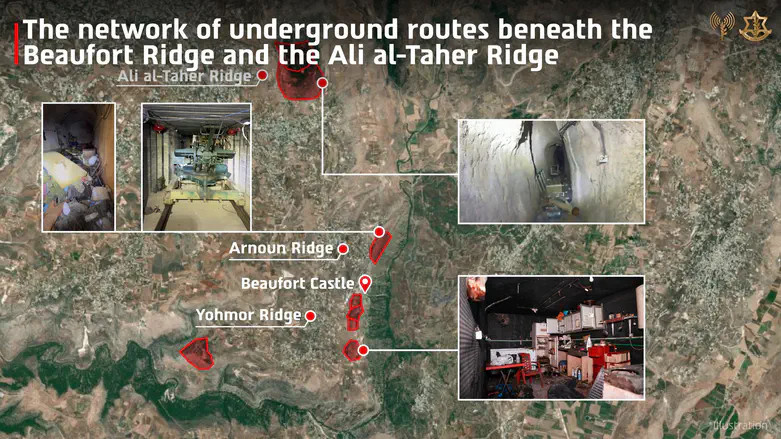
The Israel Defense Forces (IDF) have successfully completed a four-month operation aimed at capturing and clearing the Ali al-Taher Ridge, a major stronghold of Hezbollah in southern Lebanon. This operation, characterized by continuous fighting under challenging terrain and persistent attacks from Hezbollah, marks a significant achievement for the IDF.
The operation is regarded as one of the most complex undertaken by the IDF in recent years. It involved a daring crossing of the Litani River, extensive ground combat, and a comprehensive intelligence effort that included various military units such as the Givati Brigade, 7th Brigade, Duvdevan Unit, and Yahalom Unit.
From the beginning, the IDF faced a challenging situation, as Hezbollah maintained almost complete control over the Litani area. The crossing of the river necessitated sophisticated deception tactics and the establishment of alternative routes, a process that took several weeks to execute. Meanwhile, the Golani Reconnaissance Unit advanced deep into the region, while additional forces targeted terrorist positions, engaging in direct combat to surprise Hezbollah fighters from multiple directions.
After securing the Beaufort complex, the IDF shifted its focus to the Ali al-Taher Ridge, which had long served as Hezbollah's command-and-control center in the area. The operation required intricate operational, logistical, and intelligence coordination among various elements of the IDF General Staff.
One of the most significant challenges faced by the IDF was the extensive underground network constructed by Hezbollah over the years. For approximately three months, IDF soldiers encountered numerous terrorists who had barricaded themselves within the tunnels, refusing to surrender. The difficult terrain, characterized by dense vegetation, rocky landscapes, and heavy fog, complicated every advance, yet the IDF maintained pressure until they achieved full control of the complex.
IDF Uncovers Extensive Tunnel Network
During the operation, the IDF discovered approximately 5,400 meters of underground tunnels and utilized tons of explosives to destroy them. Additionally, large quantities of weapons and terrorist infrastructure were seized alongside the tunnels. The IDF reported that the Iranian infrastructure operating in the area was completely dismantled.
Despite the ongoing fighting, Hezbollah attempted to reinforce its positions at the ridge, sending additional fighters and supplies. However, the IDF successfully cut off access routes, eliminating threats and preventing Hezbollah from reestablishing its presence in the area.
Estimates suggest that dozens of terrorists were active in the region; some were killed, while others fled. The IDF has made it clear that this operation does not signify the end of its activities in Lebanon. The 36th and 91st Divisions remain active in the sector, prepared to conduct preventive and counterterrorism operations to thwart any attempts by Hezbollah to regain control.
Clearance Granted
The IDF's message is clear: the Yellow Line remains unchanged, and Israel does not plan to withdraw from the areas where it is currently operating. Any efforts by Hezbollah to rebuild its capabilities or approach the border will be met with immediate military response.
After four months of intense fighting, the IDF has left one of Hezbollah's most significant strongholds devoid of terrorists, making it considerably more difficult for the organization to return.