U.S. Special Operations Forces Address Risks of Blast Exposure
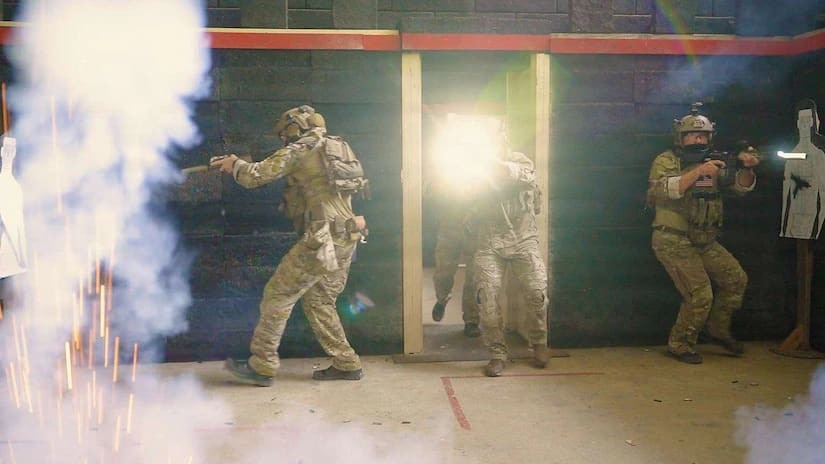
The U.S. special operations forces community is taking significant steps to address the hidden dangers of repeated blast overpressure, which poses a threat to the cognitive health of warfighters while maintaining their combat readiness. In the course of just six months of initial entry training, a special operations forces (SOF) soldier may fire thousands of rounds, use numerous flash-bang devices, and conduct multiple explosive breaches. For these operators, exposure to low-level blasts of less than four pounds per square inch is a common occurrence in their training and operational environments.
Managing this risk is a considerable challenge. The scientific community has raised concerns that cumulative exposure to blasts could lead to long-term cognitive issues, yet there are currently no established thresholds to guide medical decisions or determine return-to-duty timelines. Tracking these blasts presents logistical challenges, as existing sensors are often cumbersome and compete for limited space on an operator's essential gear. Additionally, vendor data frequently fails to integrate seamlessly with standard military systems, and there is a lack of consensus on how to effectively measure and accumulate peak and incident pressure.
"Current sensors only capture the blast wave itself, leaving a significant gap in understanding the cognitive, physiological, or biomarker data for the operator exposed to it," stated Army Sgt. Maj. Chris McNamara, human weapon system director for the 3rd Operations Support Group. To address these gaps, the SOF community has initiated data-driven projects such as the Elite Force Pilot Team.
This specialized task force is focused on implementing high-fidelity monitoring during high-risk training and operations. Their objective is to standardize the decision-making process regarding risk and readiness. The pilot team aims to mitigate the effects of blast overpressure by monitoring training and operational activities, utilizing lessons learned to refine return-to-duty protocols and correlate blast exposure with clinical outcomes through evidence-based biomarkers.
McNamara emphasized the operational realities of these initiatives, noting the need to balance timely data collection with the continuity of training. He highlighted the importance of identifying accurate, nonintrusive methods for gathering data on blast exposure, cognitive performance, and biomarkers.
Kathy Lee, director of warfighter brain health policy at the Office of the Assistant Secretary of War for Health Affairs, remarked that while the scientific community works toward establishing universal medical standards, SOF leaders are proactively making changes to training and equipment. One such innovation is the development of multiuse charge housings designed to enhance target effects while protecting service members from hazardous blast overpressure.
Constructed from nontoxic, inert materials, this dual-purpose system is designed for both sheet explosives and detonation cords. By employing advanced 3D modeling and wave-shaping techniques, the housing directs blast energy toward the target, reducing the overall explosive weight while maintaining target-defeat capabilities and decreasing hazardous blast overpressure by 25-60%.
This system is user-friendly, significantly streamlining charge preparation and maximizing training efficiency, and is currently being prepared for broader military distribution. Chris Wilson, division lead for human weapon systems at the U.S. Special Operations Command’s Science and Technology Directorate, stated, "Our priority is to field technology that treats the operator as our premier weapon system. Innovations like this housing demonstrate that we can achieve both lethality and safety. By leveraging advanced engineering to shape blast physics, we are actively reducing the physical toll on our operators while ensuring they remain effective in the field."
In addition to these innovations, firing ranges and facilities are being redesigned based on advanced blast wave modeling, and new materials that absorb shockwaves are being utilized. Operators are also benefiting from enhancements to their standard gear, including updated weapon suppressors and strict helmet policies.
Researchers are employing biometric instrumented head forms to analyze the effects of blasts on helmets, leading to improvements in helmet padding systems. Furthermore, new applications are being developed to facilitate the recording of blast overpressure data in the field.
The overarching requirement for warfighters remains clear: a low-burden sensor with integrated power and interoperable data that clinicians can utilize to monitor health effectively. By taking proactive measures now, U.S. Special Operations Command is working to enhance brain health, detect early warning signs, and implement preventive strategies to extend operational longevity and ensure the long-term health of SOF personnel.