Iran to Establish New Restricted Maritime Zone Near Hormuz Strait
Iran is set to declare a new restricted maritime zone outside the Strait of Hormuz in the coming days, according to Mohsen Rezaei, the secretary of Iran's Supreme National Security Council. He warned that any vessel entering this area would be placed on a sanctions list. This announcement was made during a televised interview on September 6, where Rezaei indicated that the new zone would extend from the U.S. Navy's blockade line into parts of the Gulf, as reported by the Iranian state-run Press TV.
Rezaei also mentioned that Iran and Oman are expected to sign an agreement regarding a new corridor through Hormuz, which will be under Iranian control. He asserted that the Strait of Hormuz is currently "completely closed and under the control of the armed forces," countering U.S. President Donald Trump's claims that the waterway remains open.
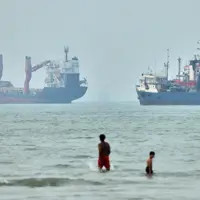
Prior to the closure, over 100 ships carrying more than 100 million tons of cargo passed through the Strait daily. Currently, only a few vessels carrying essential goods for Iran are transiting the waterway. Rezaei claimed that the U.S. is attempting to smuggle several vessels through the Strait, but these ships often face significant risks.
In a demonstration of military capability, Rezaei stated that Iran successfully tested a new anti-ship missile above a U.S. Navy vessel just two days prior to the interview. He described the missile test as a significant event, claiming it caused panic among U.S. forces.
Rezaei dismissed allegations that the U.S. economic blockade is leading to widespread famine in Iran, asserting that the Iranian government has prepared for such challenges and has sufficient food and essential goods in stock.
In related developments, the Iranian Foreign Ministry issued a warning to South Korea against any military involvement in U.S. operations in the Strait of Hormuz, indicating that such actions could have serious consequences. This comes after South Korea expressed intentions to contribute to U.S. security efforts in the region.
The situation remains tense as Iran maintains its stance on controlling the Strait of Hormuz, a critical passage for global oil shipments, while also navigating complex international relations.