Hesai Technology Faces U.S. Military Blacklist Amid Nvidia Partnership
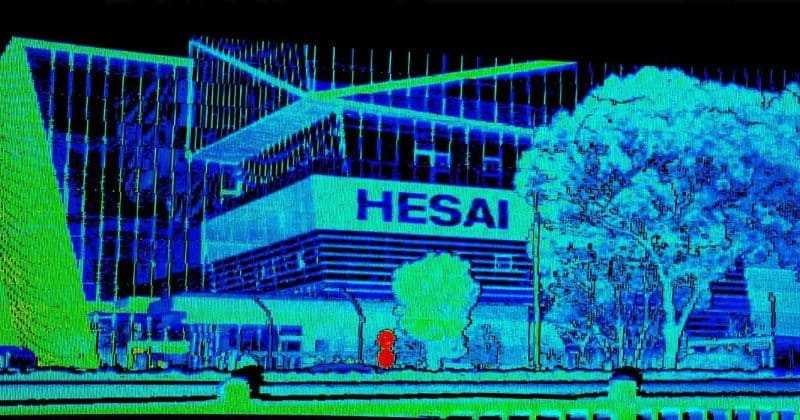
Hesai Technology, a prominent Chinese lidar manufacturer, has been officially classified as a Chinese military company by the U.S. Department of Defense (DoD), a designation that was upheld by a federal court. This ruling, made in January 2024, has significant implications for the company, which holds a 37% share of the global lidar market and recently secured a partnership with Nvidia to supply lidar technology for its next-generation autonomous driving platform.
The DoD added Hesai to its Section 1260H list of Chinese military companies, which flags firms believed to contribute to China's military capabilities, regardless of their primary commercial focus. Hesai contested this designation, arguing that its products are intended for self-driving vehicles, not military applications. However, a U.S. District Court upheld the Pentagon's classification in July 2025, following a brief period in late 2024 when Hesai was temporarily removed from the list due to new information.
In September 2025, U.S. Senators Scott, Blackburn, and Moreno urged the SEC and Treasury Department to delist Hesai from NASDAQ, expressing concerns that American investors should not support a company deemed a national security threat by the Pentagon. Despite this, in January 2026, Nvidia chose Hesai as a lidar supplier for its DRIVE AGX Hyperion 10 platform, which is designed for Level 4 autonomous driving, meaning the vehicle can operate without human intervention in specific conditions.
This partnership builds on a prior agreement from 2023, where Hesai sensors were integrated with Nvidia platforms. Additionally, in March 2026, Hesai joined Nvidia’s Halos AI Systems Inspection Lab, a program focused on safety validation for autonomous systems.
Hesai's plans for 2026 include ramping up production capacity to over 4 million units. The company is publicly traded on NASDAQ under the ticker HSAI and on the Hong Kong Stock Exchange as 2525. While a potential delisting from NASDAQ would not eliminate its public market presence, it would likely reduce liquidity for American investors and impact the stock's valuation.
As U.S. regulations tighten around foreign investments in technology firms with military connections, Hesai finds itself at the center of a complex regulatory landscape, navigating both legal challenges and market dynamics as it continues to expand its operations.