Declassified 1959 Study Proposed US Army Lunar Outpost by 1966
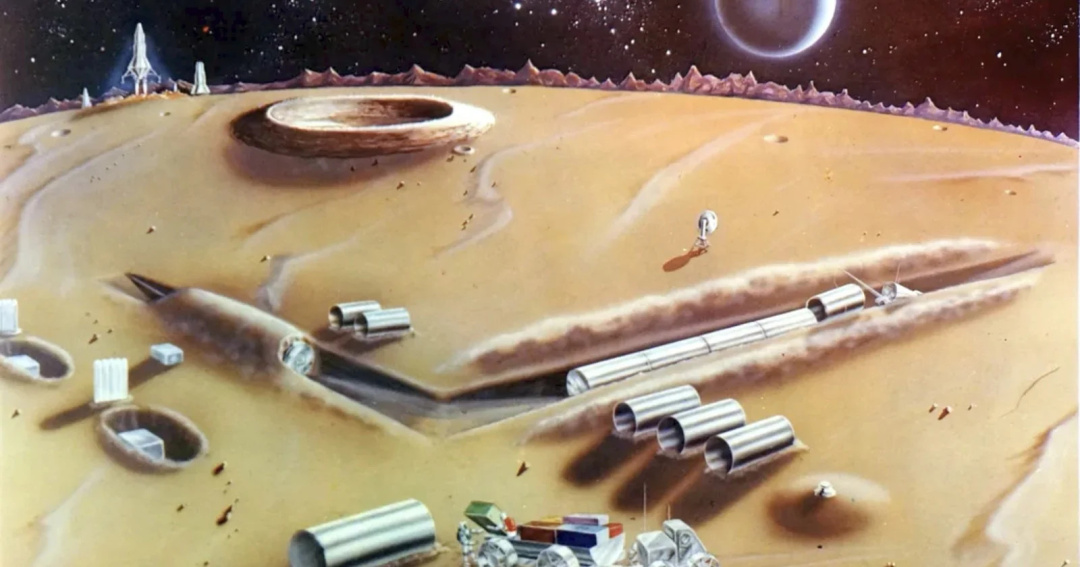
In a recently declassified feasibility study from 1959, the US Army proposed the establishment of a twelve-man lunar outpost by November 1966. This ambitious project, known as Project Horizon, was directed by Lieutenant General Arthur G. Trudeau, who emphasized its critical importance to the future of the Army. The study was initiated due to budget constraints, with Trudeau instructing that no additional funds were available and that results were needed by mid-May.
The two-volume report outlined plans for a lunar outpost, with the first two men landing on the Moon in April 1965, followed by a permanent base. The outpost was to be constructed from cylindrical metal tanks buried under lunar material for protection against temperature extremes and radiation. Each tank was designed as a vacuum-insulated structure, capable of maintaining a comfortable internal temperature with minimal energy input.
Power for the outpost was to be supplied by nuclear reactors, with the construction phase scheduled to begin in January 1965. The study identified Brazil as a potential launch site, as the existing missile ranges were deemed unsuitable for the program's needs. The transport plan involved a complex orbital approach to deliver cargo and personnel to the Moon, as a direct flight would require a rocket that was not yet available.
Despite the detailed planning, Project Horizon was never approved for development beyond the feasibility study phase. The Army's own history indicates that only the initial phase was completed, and the project ultimately transitioned to NASA, which restructured the mission for civilian purposes. The study remains a significant historical document, illustrating the early ambitions of the US space program and the logistical challenges of lunar exploration.