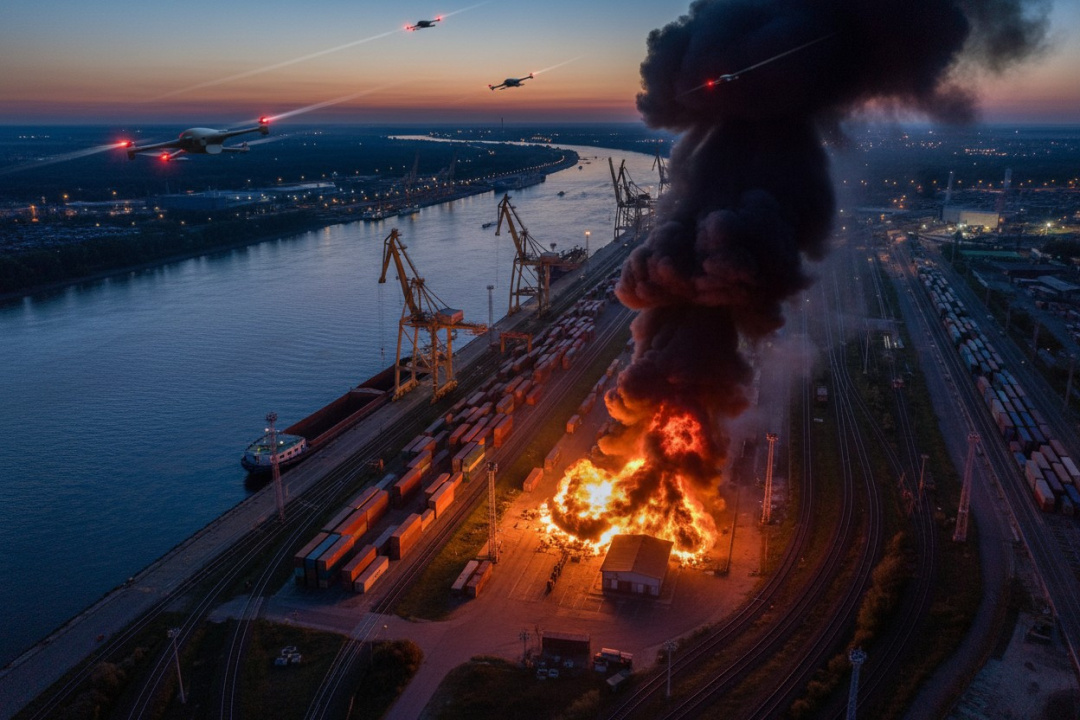
Ukraine's Ground Robots Transform Military Logistics and Combat Operations
In August 2024, special forces from five Ukrainian military intelligence units crossed the Black Sea to raid Russian-held Kinburn Spit. The commandos from units such as Chimera, Aratta, Stuhna, Paragon, Terror, and the Siberian Battalion executed the mission, destroying equipment before withdrawing. Fast forward to July 2026, Ukraine employed an uncrewed surface vessel to transport a ground robot equipped with a Wolly 7.62 combat module, marking a pioneering moment in military robotics. This robot engaged targets upon landing, showcasing a new approach to combat operations.
While such operations garner attention, the majority of robotic missions are less glamorous, focusing on logistics and evacuation. In the 3rd Assault Brigade, for instance, approximately 95% of ground-robot tasks are logistical, with combat missions constituting only a small fraction. The Khartiia unit, which conducted Ukraine's first fully robotized operation in late 2024, reported similar findings, emphasizing the importance of logistics in military operations.
Ukrainian officers have noted that ground robots streamline processes, allowing junior officers to execute commands without excessive bureaucracy. By August 20, 2026, these robots had completed over 100,000 frontline missions, averaging one sortie every three and a half minutes. This innovation represents a significant advancement in the military supply chain, focusing on labor absorption rather than increasing lethality.
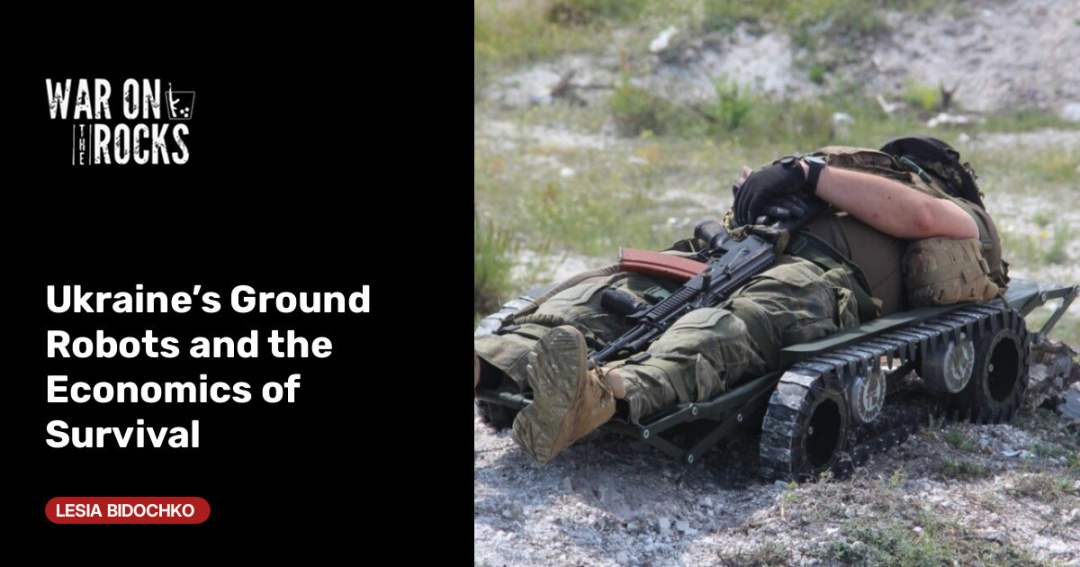
As traditional supply routes become more vulnerable to enemy reconnaissance, ground robots have emerged as a solution for delivering essential supplies to frontline positions. They can navigate terrain that is too dangerous for conventional vehicles, significantly reducing the risk to human soldiers. For example, a Bizon ground robot successfully retrieved a wounded soldier from a heavily mined area, demonstrating the effectiveness of robotic evacuation.
The integration of ground robots has transformed logistics within the Ukrainian military. In the 21st Unmanned Systems Regiment, robots now handle up to 90% of deliveries, and the 3rd Assault Brigade has seen a tenfold increase in robotic deliveries over a year. This shift allows for smaller, more frequent resupply missions, minimizing human exposure to danger.
Despite their advantages, ground robots are not invulnerable. They face threats from mines, drones, and small arms fire, but their loss does not equate to human casualties. A notable incident involved six robots being destroyed while attempting to rescue a soldier trapped for 33 days; the seventh robot successfully completed the mission, highlighting the trade-offs involved in robotic operations.
The Ukrainian military's systematic use of ground robots has the potential to reduce personnel losses by up to 30%, according to a 2024 General Staff model. This approach is particularly relevant in Ukraine's context, where manpower is limited and supply routes are under constant surveillance. The establishment of the Unmanned Systems Forces in June 2024 has further unified aerial, maritime, and ground robotic systems, enhancing operational efficiency.
As NATO and other military organizations observe Ukraine's advancements, lessons are being drawn about the importance of integrating robotic systems into existing frameworks. The development of platforms like Delta, which manages missions across different types of unmanned systems, exemplifies the need for cohesive operational strategies.
While Russia has developed its own robotic systems, it has not matched Ukraine's operational volume or integration. The ongoing conflict has underscored the necessity for robust communication systems and the ability to adapt to electronic warfare challenges, as demonstrated by Russia's deployment of jamming technologies.
Looking ahead, the focus for military planners will be on creating integrated systems that can withstand the rigors of combat while maximizing the utility of robotic technologies. The Ukrainian experience illustrates that the future of warfare may hinge on the ability to maintain operational continuity through advanced logistics and innovative technology.