Fire Ant Cyber Espionage Group Exploits Cisco Routers for Intrusion
An investigation into a seemingly minor configuration issue revealed a significant cyber espionage operation by the group known as Fire Ant. The anomaly was identified when a tunnel interface appeared active on a Cisco IOS XR router without any corresponding configuration history. This inconsistency raised alarms, suggesting that the router's operational state could not be trusted, leading investigators to uncover a complex infiltration.
Fire Ant's approach involved custom-built malware specifically designed for IOS XR, integrating deeply with the router's internal functions. One notable tactic included disguising malicious components as legitimate services, operating on a schedule that avoided routine inspections. Additionally, the group modified the router's syslog function to filter out log messages that did not contain the word "Health," effectively erasing traces of their activities.
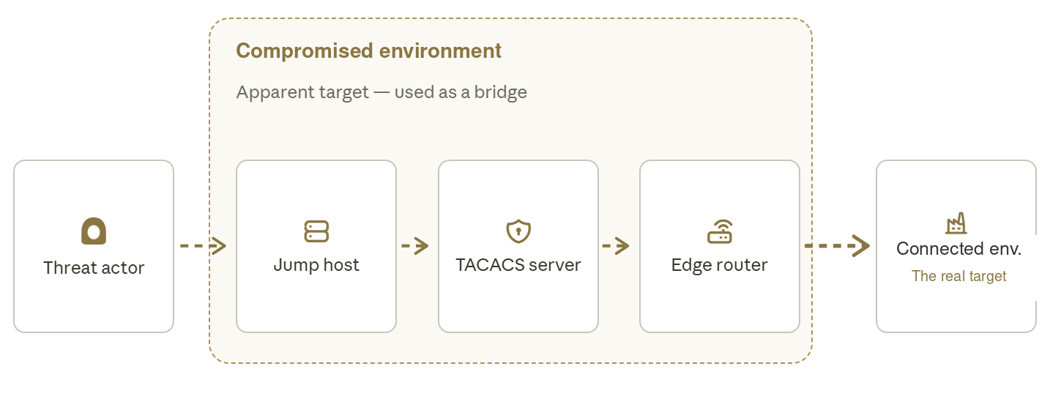
The investigation revealed that Fire Ant was not merely maintaining access but was actively probing other high-value networks through compromised infrastructure. They exploited the environment to explore connections to critical systems, indicating a strategic focus on the "target behind the target."
A particularly concerning aspect of their operation involved injecting malicious code into the TACACS authentication daemon, which is responsible for managing administrator logins. This allowed Fire Ant to intercept and copy credentials in real time, posing a significant threat to network security.
Moreover, Fire Ant utilized persistent backdoors on Linux systems, some of which had been dormant for years, camouflaged as normal system services. This made detection challenging, as standard forensic checks could overlook these hidden threats.
One of the most sophisticated backdoors did not rely on traditional listening ports but instead monitored raw network traffic for specific packets to activate. This method demonstrated a level of technical sophistication associated with known espionage groups, although the specific implementation differed from previously documented tools.
Fire Ant's activities highlight the need for a reevaluation of security practices, particularly regarding the protection of infrastructure that supports sensitive data systems. The group's ability to manipulate logs and maintain stealthy access underscores the importance of comprehensive monitoring and verification processes in cybersecurity.
In conclusion, the Fire Ant operation serves as a reminder that defenders must safeguard not only the systems that store sensitive information but also the infrastructure that enables connectivity and trust within networks. When such infrastructure is compromised, the implications extend beyond individual organizations, potentially affecting broader networks and critical infrastructure.