NASA's Roman Space Telescope Utilizes Mirror from US Spy Agency's Surplus
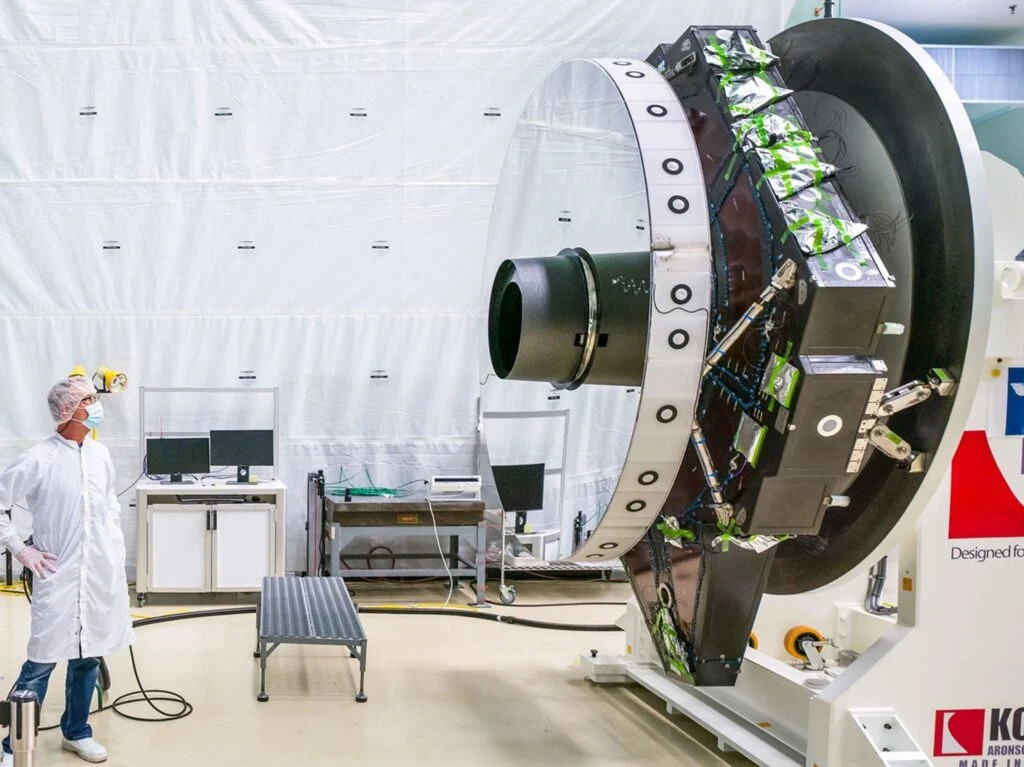
The Nancy Grace Roman Space Telescope, set to launch on August 30, 2026, will utilize a primary mirror that has an intriguing backstory. Originally part of surplus hardware from the National Reconnaissance Office (NRO), this 2.4-meter mirror was transferred to NASA in 2012. The mirror, which began its life not as an astronomical instrument but as part of a spy agency's assets, has been re-engineered to form the core of Roman, an observatory designed to survey the universe with unprecedented efficiency.
The transfer involved not just the mirror but also a collection of space-qualified optical components and support structures. NASA has spent years transforming these inherited parts into a fully functional observatory. Roman will feature a mirror of the same diameter as the Hubble Space Telescope but with a field of view at least 100 times larger, enabling it to capture more of the sky at once.
NASA's efforts to adapt the NRO's hardware have resulted in a sophisticated system that includes a redesigned optical train and advanced instruments. The telescope's capabilities will allow it to map the sky significantly faster than Hubble, with the potential to return about 20 petabytes of data during its primary mission.
The NRO's contribution to Roman is a fascinating example of how surplus intelligence assets can be repurposed for scientific exploration. While the original mission of the hardware remains classified, its new role in astronomy is set to provide valuable insights into dark energy, galaxy formation, and the distribution of dark matter.
As the launch date approaches, NASA is finalizing preparations at Kennedy Space Center, where the telescope is currently housed in a Falcon Heavy fairing. The mission is expected to last five years, with the possibility of extending operations to ten years, during which Roman will explore billions of galaxies and contribute to our understanding of the cosmos. The journey from a storage facility in Rochester, New York, to a position in space is a testament to the innovative ways in which scientific and intelligence communities can collaborate for the advancement of knowledge.