Israel Intensifies Actions Against UNRWA and Humanitarian Organizations
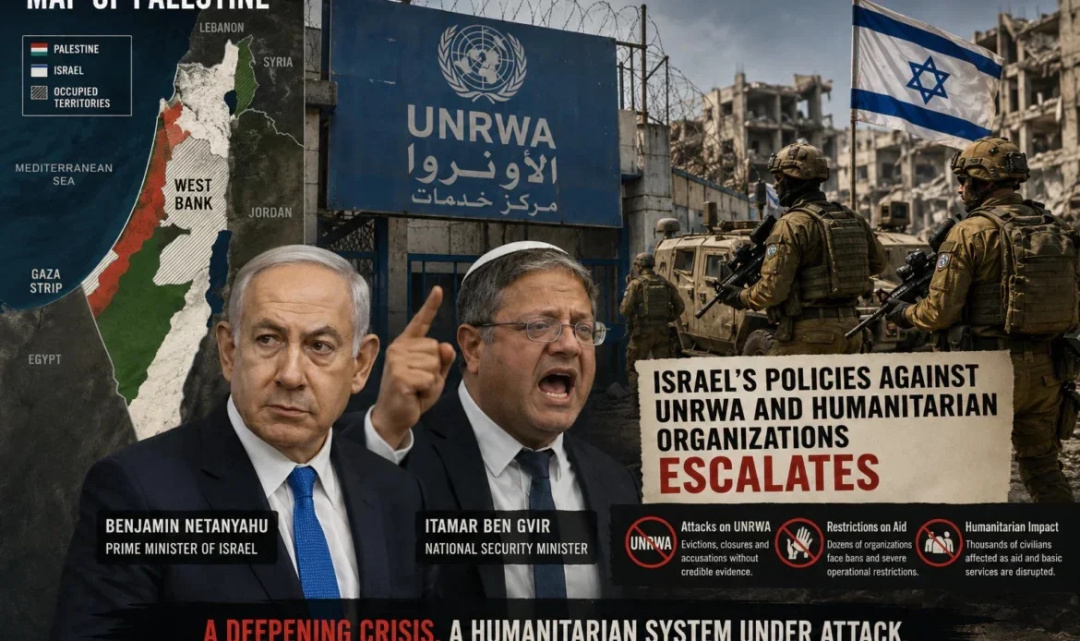
Israeli Prime Minister Benjamin Netanyahu and members of his far-right government, including National Security Minister Itamar Ben-Gvir and Finance Minister Bezalel Smotrich, have expressed pride in their policies and military campaign in Gaza, which has resulted in significant Palestinian casualties. On August 26, a letter signed by 45 Democratic U.S. Senators urged Netanyahu to intervene against violence by Israeli settlers in the West Bank.
Israel's long-standing policies towards Palestinians and military actions in Lebanon and Syria have sparked international controversy. The U.S. has historically supported Israel politically, militarily, and diplomatically, often using its veto power at the UN Security Council to block resolutions seen as unfavorable to Israel.
On August 25, Ben-Gvir announced the removal of UNRWA from its facility in Kafr Aqab, claiming involvement in terrorism by UNRWA employees and asserting that the agency has no place in Jerusalem or Israel. Reports indicate that Israeli police forcibly removed UNRWA personnel from the site, with Ben-Gvir declaring this action as historic on social media.
The Kafr Aqab complex, established in 1952, provides vocational training and health services to Palestinians. The Palestinian presidency condemned the evacuation, calling for an urgent UN Security Council meeting to address Israeli actions against UN institutions.
This latest move against UNRWA follows a visit by representatives from over 25 diplomatic missions and international organizations to the Qalandiya center, highlighting growing international concern over humanitarian operations in East Jerusalem. The Israeli government has also imposed new restrictions on numerous international humanitarian organizations in the Palestinian territories and Gaza, with 37 organizations facing potential activity prohibitions.
Affected organizations include Médecins Sans Frontières, the Norwegian Refugee Council, CARE, World Vision, and Oxfam, with new requirements for security screening of Palestinian employees. Humanitarian organizations have expressed concerns that these requirements could expose employees to harassment or worse.
In Gaza, 11 UNRWA facilities serving as emergency shelters for displaced individuals have been damaged, exacerbating the humanitarian crisis. UN and international organizations have urged Israel to reconsider its decisions affecting humanitarian operations, warning that these measures could effectively end their presence in the region.
Israel has accused UNRWA of providing cover for Hamas, particularly following the October 7 attacks, although an independent review found some issues with UNRWA's neutrality but noted a lack of supporting evidence for broader Israeli allegations. Independent UN investigators have accused Israel of targeting Palestinian children and described the situation in Gaza as part of an ongoing genocidal campaign.
As Gaza faces immense destruction and humanitarian hardship, further restrictions on aid organizations could have far-reaching consequences. For Palestinians, these developments represent a significant threat to the international infrastructure that has historically provided essential services such as education and healthcare. The outcome of this confrontation may determine the future of UNRWA in Jerusalem and Gaza and the ability of international humanitarian organizations to operate independently during this critical period.