NASA's New Space Telescope Developed from Spy Satellite Set for Launch
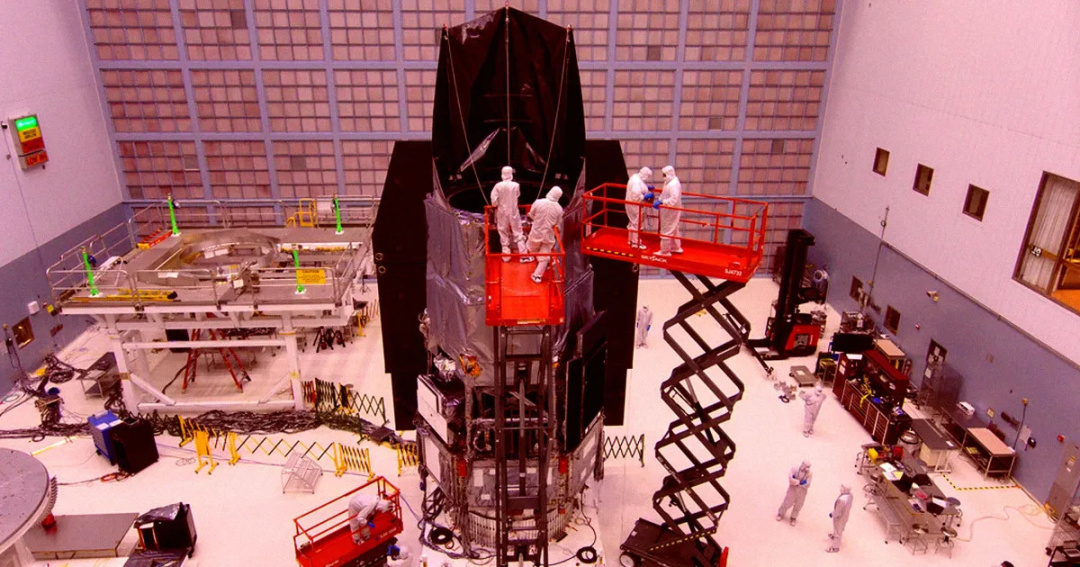
NASA's Nancy Grace Roman Space Telescope is preparing for launch from Kennedy Space Center on a SpaceX Falcon Heavy rocket. This new orbital observatory is anticipated to succeed the Hubble Space Telescope and is expected to advance our understanding of the universe's expansion and the discovery of exoplanets.
Interestingly, the Roman Space Telescope has a unique origin. It was initially developed by the National Reconnaissance Office, a government spy agency, which offered NASA a surveillance satellite that was not in use. This satellite was transformed into the telescope we see today. The original purpose of the platform was to monitor America’s adversaries in a post-9/11 context, but the program was discontinued before it could be launched.
Duke University cosmologist Daniel Scolnic explained that the National Reconnaissance Office approached NASA with the idea of repurposing the satellite for astronomical observations instead of surveillance. This unexpected collaboration led to the telescope's development, which required significant modifications to adapt the spy satellite for space exploration.
NASA engineers worked diligently to integrate various scientific instruments onto the platform, including a high-resolution infrared camera, and to ensure it could operate effectively in deep space, particularly at Lagrange Point 2, approximately one million miles from Earth.
The Roman Space Telescope is poised to refine existing astrophysical models, especially in light of recent measurements suggesting that current models may be inaccurate. Scolnic noted that the telescope will play a crucial role in verifying these models.
Additionally, the telescope is expected to dramatically enhance the speed of observations within our galaxy. According to Goddard astrophysicist Julie McEnery, a month of observations with the Roman telescope could yield results that would take Hubble a century to achieve.
Despite its unconventional beginnings, the Roman Space Telescope is ahead of schedule and under budget, a notable achievement compared to previous projects. NASA administrator Jared Isaacman expressed optimism about the project, emphasizing the importance of learning from successful initiatives like this one. This comes in contrast to previous attempts by the Trump administration to terminate the telescope project since 2017.