CIA Director John Ratcliffe's Secret Moscow Visit Raises Concerns
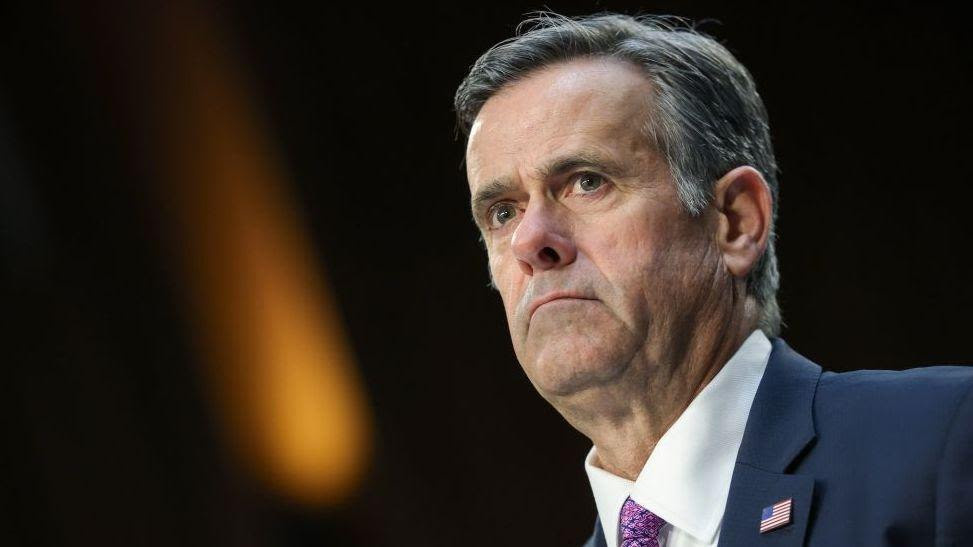
CIA Director John Ratcliffe's recent trip to Moscow has sparked significant interest, particularly given the current geopolitical climate. President Donald Trump characterized the visit as 'semi-routine,' but many analysts argue that the nature of the trip, which involved a 10,000-mile journey on a U.S. military plane, indicates a more serious purpose. Ratcliffe met with key Russian intelligence officials, including Sergei Naryshkin, the head of Russia's foreign intelligence service, in an unannounced meeting that the Kremlin confirmed.
This visit comes nearly five years after Ratcliffe's predecessor, William Burns, made a similar trip during a time of heightened tensions, just before Russia's invasion of Ukraine. Observers speculate that Ratcliffe's mission was primarily to caution Moscow against escalating its military actions in Ukraine, particularly regarding potential threats to NATO allies in the Baltic states. Reports suggest that U.S. officials are concerned about Russia's intentions, especially in light of recent intelligence assessments indicating that President Vladimir Putin may be contemplating limited military actions against NATO countries.
The backdrop of this visit includes increasing domestic pressure on Putin to respond to Ukraine's successful drone strikes, which have significantly impacted Russia's energy infrastructure and heightened public dissatisfaction. The Kremlin perceives these attacks as part of a broader NATO strategy to undermine Russian stability by using Ukraine as a proxy.
In response to these developments, analysts have outlined various potential Russian strategies, ranging from intensified missile strikes on Ukraine to expanding cyber warfare against NATO nations. There are also concerns that hardliners within the Kremlin may advocate for a limited military engagement with a Baltic state, testing NATO's resolve and potentially avoiding a full-scale conflict.
The implications of Ratcliffe's visit extend beyond immediate military concerns. It serves as a reminder of the U.S. commitment to NATO's mutual defense principles, particularly Article 5, which could be invoked in the event of an attack on a member state. The situation is further complicated by the strategic importance of the Suwalki Gap, a narrow land corridor that separates Kaliningrad from Belarus, which is critical for the security of the Baltic states.
As tensions escalate, the potential for miscalculation remains high. The use of tactical nuclear weapons by Russia, while still considered a last resort, has been a topic of discussion among military analysts, particularly in the context of Russia's military doctrine. The taboo against using such weapons could be tested if the Kremlin feels cornered.
In conclusion, while the exact motivations behind Ratcliffe's trip remain unclear, it is evident that the visit was not routine and reflects the complex and precarious nature of U.S.-Russia relations at this time. The international community will be closely monitoring the developments that follow this significant diplomatic engagement.