NASA's Nancy Grace Roman Telescope to Launch with Spy Technology
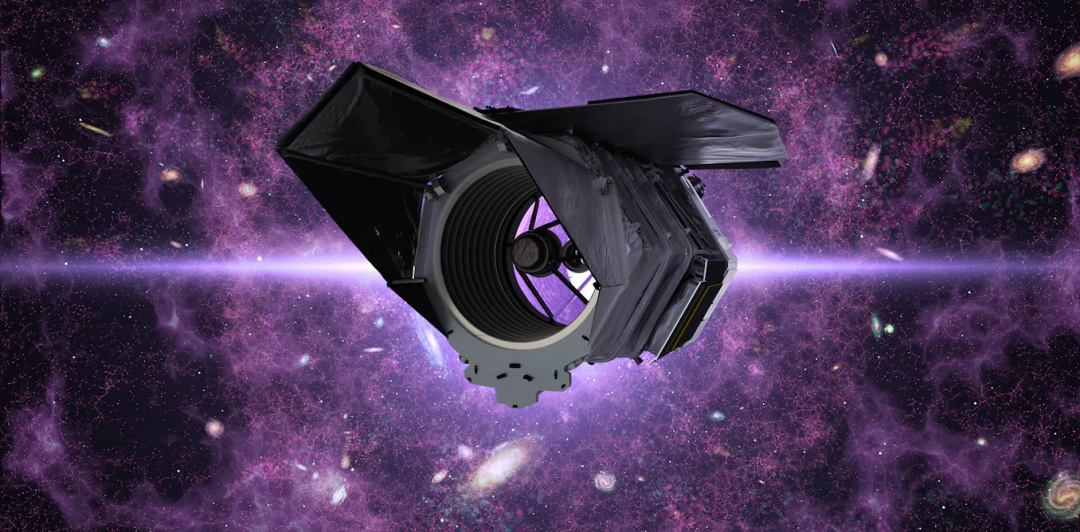
NASA is gearing up for the launch of the Nancy Grace Roman Space Telescope, a groundbreaking instrument designed to survey a billion galaxies and trace the evolution of the universe. This innovative telescope, which has its roots in America's spy program, was transferred to NASA in 2012 after the National Reconnaissance Office no longer required it for its missions. Following over a decade of modifications, the telescope is slated for launch as early as August 30, 2026.
Once operational, the Roman Space Telescope will provide astronomers with critical data to address some of the most challenging questions in the field. It is expected to make significant discoveries by examining the three-dimensional distribution of dark matter, which, while not directly observed, influences the behavior of visible matter in the universe.
The telescope will also observe supernovae, allowing scientists to measure the universe's expansion rate. This information is vital for understanding the roles of dark matter and dark energy, which together constitute the majority of the universe's energy, yet remain largely mysterious.
In addition to its cosmic observations, Roman will focus on detecting rogue planets within our Milky Way galaxy. By monitoring slight variations in light from stars, the telescope can infer the presence of these elusive planets as they pass in front of their host stars, causing temporary light distortions.
A key feature of the Roman Space Telescope is its coronagraph instrument, which will test technology aimed at detecting Earth-like planets orbiting other stars. This instrument blocks most starlight, enabling astronomers to identify much fainter planets that are otherwise obscured.
NASA has leveraged the telescope's spy origins to enhance its capabilities. Roman boasts a wide field of view, allowing it to capture larger sections of the sky compared to traditional space telescopes like Hubble. This is made possible by its fast optics, which enable it to project a broader area onto its focal plane.
The telescope's camera is equipped with 18 near-infrared detectors, similar to those used in the James Webb Space Telescope, but with four times the pixel count. Each of Roman's detectors has approximately 16 megapixels, resulting in a total coverage of around 300 megapixels. This advanced technology represents a significant advancement in astronomical imaging.
The development of these detectors is the culmination of years of research and innovation, enabling astronomers to capture faint signals from distant celestial bodies. The successful implementation of this technology has already led to remarkable discoveries, including images of early galaxies produced by the Webb telescope.
Anticipation is high for the discoveries that the Roman Space Telescope will unveil. The expectation stems from a historical pattern where advancements in technology have consistently led to groundbreaking scientific discoveries. For instance, the Nobel Prize-winning research on dark energy relied on sensitive digital imaging detectors, a technology that has evolved significantly since its inception.
As NASA prepares for the Roman's launch, it is also looking ahead to future missions, including the Habitable Worlds Observatory, which aims to directly image Earth-like planets and search for signs of life beyond our solar system. The scientific community eagerly awaits the insights that the Roman Space Telescope will bring, paving the way for new discoveries in our understanding of the universe.