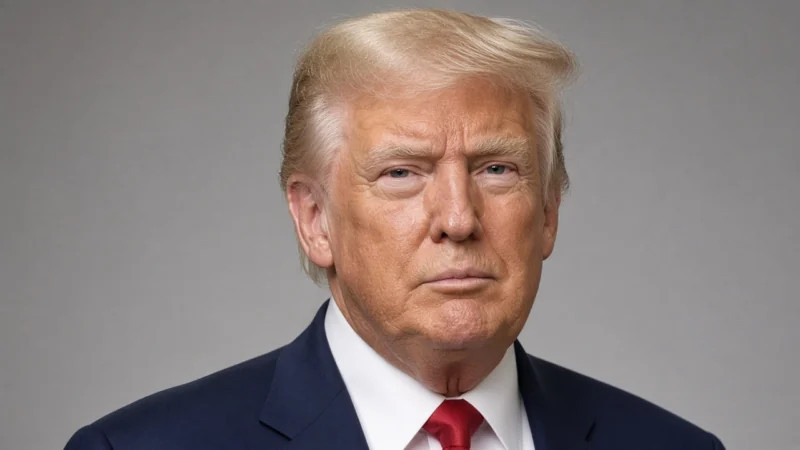
Mark Esper Advocates for Clarity Act as National Security Measure for Crypto

Mark Esper, who served as Secretary of Defense under the Trump administration, has made a compelling case for the Digital Asset Market Clarity Act, emphasizing its significance beyond financial markets to national security. In his op-ed published in the Financial Times, Esper highlights the growing threat posed by countries such as North Korea and China, which are increasingly using digital assets for illicit activities. He argues that the U.S. regulatory framework has not kept pace with these developments, necessitating the passage of the Clarity Act (H.R. 3633).
The proposed legislation aims to extend the Bank Secrecy Act's anti-money-laundering and know-your-customer requirements to digital-commodity brokers, thereby enhancing the Treasury Department's authority to target state-sponsored bad actors. One of the key challenges the bill addresses is the confusion surrounding regulatory jurisdiction over digital assets. The Clarity Act categorizes digital assets into three distinct groups: securities, which remain under the purview of the SEC; digital commodities, which fall under the CFTC; and stablecoins, which are managed separately under the already passed GENIUS Act.
In addition to clarifying jurisdiction, the Clarity Act strengthens regulatory measures by invoking the Treasury's Section 311 authority for digital assets. This authority has historically been used to sever ties with foreign banks and financial institutions involved in money laundering or terrorism financing.
The legislative journey of the Clarity Act has seen significant progress, with the House passing it by a vote of 294-134 in July 2025, and the Senate Banking Committee advancing it with bipartisan support in May 2026. A procedural vote is scheduled for September 15, 2026, as Senate Majority Leader John Thune has filed for cloture.
Esper's position is particularly noteworthy given his role on Coinbase's Global Advisory Council, which raises questions about potential conflicts of interest. However, his arguments regarding national security are supported by documented threats, including North Korea's Lazarus Group, which has been linked to major crypto heists, and China's use of cryptocurrency to evade sanctions and fund espionage.
Esper contends that maintaining crypto activity within the U.S. under clear regulations will provide intelligence and law enforcement agencies with better visibility into financial flows, as opposed to allowing these activities to shift to less regulated offshore jurisdictions.
The timing of Esper's op-ed is strategic, coinciding with an impending procedural vote that could influence senators who may perceive crypto regulation as a niche financial issue rather than a matter of national defense. Wall Street is closely monitoring the legislative developments, as evidenced by the positive response of crypto-exposed equities following the Senate Banking Committee's advancement of the Clarity Act.
However, the extension of BSA requirements to digital-commodity brokers could impose substantial compliance costs on smaller exchanges and decentralized finance platforms, potentially leading to market consolidation around larger firms like Coinbase. This aspect raises questions about the balance between national security interests and the competitive landscape of the crypto market.