Docs Show Institutions Reluctant on Chinese Espionage Cases
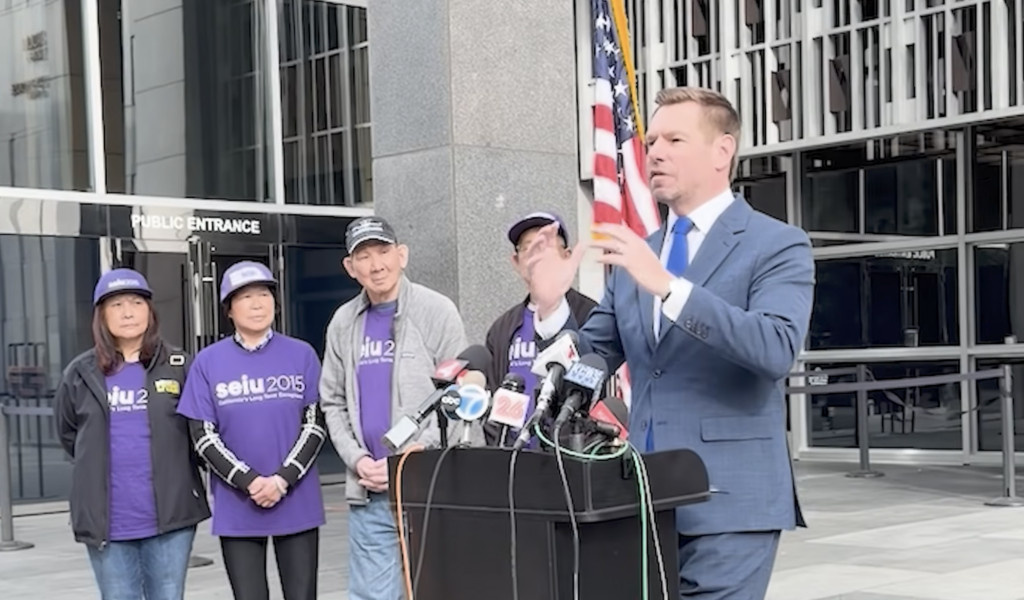
Declassified documents from the FBI have brought to light a concerning trend within U.S. institutions regarding the handling of Chinese influence operations aimed at Democratic officials. This week, the FBI released files related to former Representative Eric Swalwell and Chinese national Christine Fang, also known as Fang Fang. The documents, which are heavily redacted, include information from a 2014 public corruption probe and details on counterintelligence efforts, revealing how a suspected Chinese intelligence operative was able to operate with minimal oversight.
Fang, who lived in the U.S. until 2015, is the daughter of officials from China’s Ministry of State Security. The FBI had suspected her of being linked to Chinese intelligence and attempted to recruit her as a source in 2013 and 2014. She was involved in facilitating contributions to Swalwell’s campaigns, contradicting earlier reports that claimed there was no evidence of illegal donations. Additionally, she maintained a personal relationship with Swalwell and placed interns in his office. Despite building a case against both Fang and Swalwell, the Justice Department did not pursue charges against Fang, raising questions about the decision-making process within the agency.
After receiving a defensive briefing from the FBI in early 2015, Swalwell severed ties with Fang, who subsequently fled to China. The DOJ closed the case without any action against either individual, leaving unresolved security risks. The documents indicate a broader reluctance among institutions to confront Chinese influence operations targeting Democratic officials. Field agents reported Fang’s illegal fundraising activities to the Justice Department’s Public Integrity Section, yet no decisive actions were taken before she left the country.
The situation was further complicated by political dynamics, as then-House Speaker Nancy Pelosi publicly supported Swalwell, allowing him to remain on the House Intelligence Committee despite the FBI's warnings. This case is not isolated; it mirrors previous incidents, such as the case involving former Senator Dianne Feinstein’s driver, who was identified as a Chinese intelligence recruit but faced no charges. The pattern suggests a troubling tendency to prioritize political considerations over national security.
More recently, Linda Sun, a senior aide to former New York Governors Andrew Cuomo and Kathy Hochul, was charged with acting as an unregistered agent of the Chinese government, although the case ended in a mistrial. These incidents highlight the ongoing targeting of U.S. politicians by the Chinese Communist Party through influence operations that exploit access and relationships.
The newly declassified files underscore the need for a more proactive approach to national security. Protecting the U.S. from Chinese influence campaigns requires timely action, including pursuing charges when evidence supports them and removing exposed officials from sensitive positions. Without such measures, the vulnerabilities that allowed individuals like Fang and others to operate will persist, posing ongoing risks to national security.