Innovative Footprint Overshoes Used by WWII Special Operations Agents
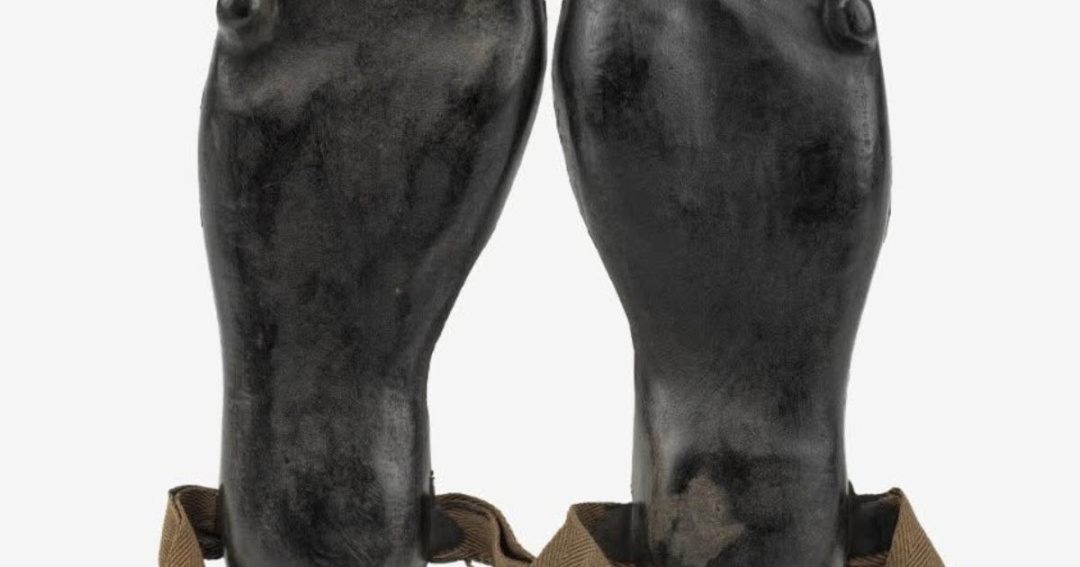
During World War II, Britain's clandestine Special Operations Executive (SOE) developed custom rubber footprint overshoes, known as "sneakers," to protect agents operating behind enemy lines in South-East Asia and the Pacific. Standard military bootprints could easily alert Japanese coastal patrols to Allied activity, so camouflage specialist Hugh Vandeleur designed rubber soles molded to resemble bare human feet. When worn over conventional combat boots, these overshoes left tracks that mimicked those of local barefoot residents, effectively concealing the presence of covert teams, including those led by notable operative F. Spencer Chapman.
The overshoes were crafted from flexible, heavy-duty rubber, enabling them to withstand maritime landings while suppressing the sounds of footsteps. Each pair was designed with fabric tying tapes that securely wrapped around the ankles and upper soles of an agent's standard footwear. However, the design faced practical limitations. The overshoes had to fit over large European military boots, resulting in disproportionately large casts that did not accurately reflect the footprints of local populations. Additionally, operatives found them bulky and clumsy, likening the experience to walking in snowshoes.
Despite their limited operational use due to these drawbacks, the concept of footprint overshoes proved influential. Decades later, during the Vietnam War, U.S. Army MACV-SOG commandos revived the idea, utilizing specialized "bark soles" or barefoot-molded jungle boots to mask their movements along the Ho Chi Minh Trail.