Understanding the Political Firewall Against Germany's Far-Right AfD
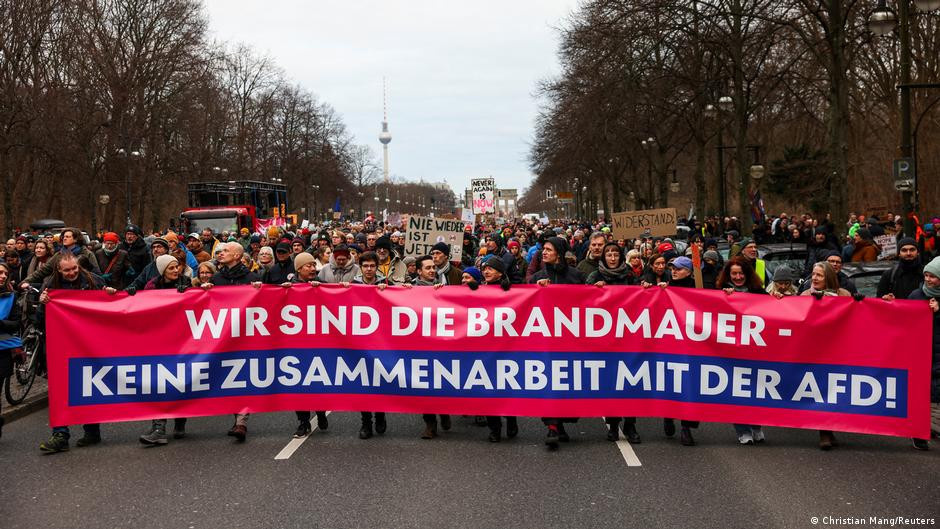
In German politics, the term "firewall" is used to describe a strict boundary against parties considered extremist, particularly the Alternative for Germany (AfD). This metaphorical firewall aims to protect democracy from influences deemed hostile. The classification of the AfD as a party hostile to democracy remains unresolved, pending a decision from the Federal Constitutional Court regarding a potential ban on the party. The Federal Office for the Protection of the Constitution has labeled certain AfD state associations as "confirmed right-wing extremist," yet the party's overall constitutional alignment is still under judicial review.
Despite ongoing discussions about banning the AfD, no formal applications have been submitted. The term "political firewall" gained traction largely due to Friedrich Merz, the leader of the center-right Christian Democratic Union (CDU), who emphasized its importance upon taking leadership in December 2021. The CDU has adopted resolutions rejecting any form of cooperation with the AfD and the socialist Left Party, aiming to maintain a clear stance against these groups.
However, the CDU's commitment to this firewall has faced challenges. In January 2025, a CDU motion in the Bundestag to reject asylum seekers passed with AfD support, leading to accusations against Merz of violating the firewall policy. Critics argue that such actions undermine the CDU's stated position and contribute to the normalization of the AfD in political discourse.
The Social Democratic Party (SPD) and the Greens also oppose cooperation with the AfD, although they lack formal resolutions. In contrast, Sahra Wagenknecht, founder of the left-wing populist Alliance Sahra Wagenknecht (BSW), has expressed willingness to engage with the AfD, particularly in the context of upcoming elections in Saxony-Anhalt.
The reliance on AfD votes has sparked outrage among party leaders, but instances of cooperation at local levels have occurred, raising concerns about the gradual acceptance of the AfD. Critics warn that such collaborations could lead to broader acceptance of the party's ideology, potentially affecting state and federal politics.
Political scientists have noted a democratic deficit if the preferences of AfD voters are consistently ignored. Wagenknecht has highlighted the undemocratic nature of excluding a party supported by a significant portion of the electorate. Some CDU members in eastern Germany have begun to question the firewall's effectiveness, suggesting a need for reevaluation of the party's stance.
Despite the pressures and challenges, the CDU leadership remains firm in its resolution against cooperation with the AfD. The future of forming governing majorities without the AfD's involvement remains uncertain, as the political landscape continues to evolve in response to the party's growing influence.