Hong Kong Vigil Organizers Convicted Under National Security Law
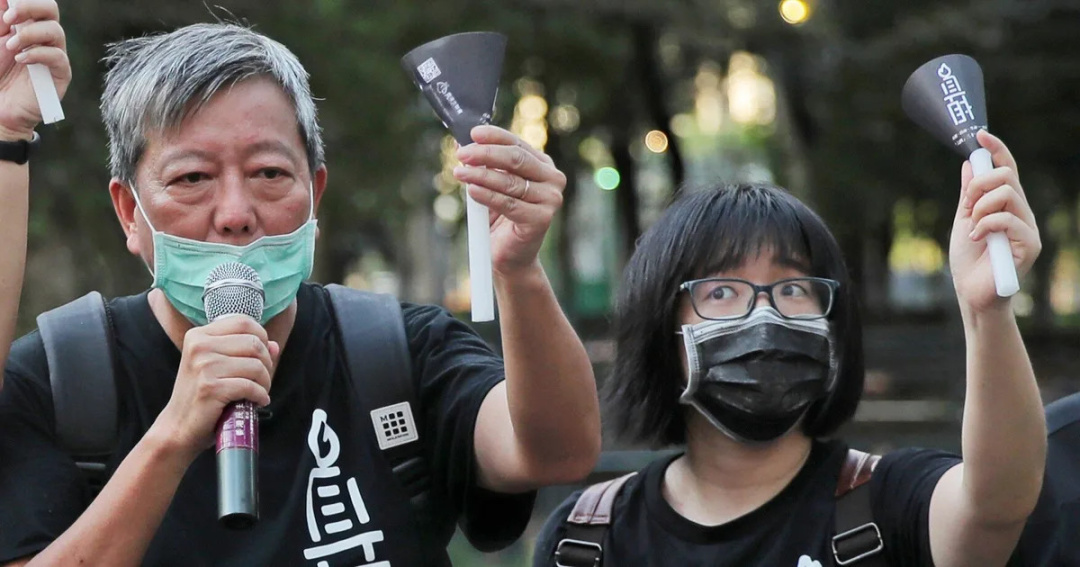
Two former organizers of Hong Kong's annual vigils commemorating the 1989 Tiananmen Square crackdown have been convicted of inciting subversion by government-approved judges. Lee Cheuk-yan and Chow Hang-tung, who led the Hong Kong Alliance in Support of Patriotic Democratic Movements of China, were charged under a national security law imposed by China in 2021. This law has significantly curtailed the pro-democracy movement in the city. Both defendants pleaded not guilty and now face a maximum prison sentence of 10 years.
The judges determined that the alliance's call to "end one-party dictatorship" was interpreted as a call to overthrow the ruling Communist Party, rather than a push for multiparty cooperation as outlined in the constitution. The judges noted that the defendants continued to promote this message even after the law was enacted, disregarding its implications under the constitution, which affirms the party's leadership as a fundamental aspect of socialism with Chinese characteristics.
Following the verdict, Lee and Chow expressed their defiance, with Chow recalling her harsh treatment in prison. The trial has been viewed as a symbol of the diminishing freedom of expression in Hong Kong, a city that once enjoyed greater political freedoms under the "one country, two systems" framework established after its return to Chinese sovereignty in 1997.
For decades, the annual candlelight vigil was the only large-scale public commemoration of the Tiananmen crackdown, attracting thousands. However, the vigil was banned during the COVID-19 pandemic, and the political environment has since shifted dramatically, with many activists jailed under the national security law. Observers have noted that the charges against Lee and Chow reflect a broader trend of suppressing dissent in Hong Kong, drawing parallels to similar tactics used in mainland China against human rights advocates.
The trial's outcome has prompted reactions from family members and supporters, with calls for justice and expressions of disappointment regarding the judicial process. The case underscores the ongoing tensions between the Hong Kong populace and the central government in Beijing, as well as the broader implications for civil liberties in the region.