U.S. Median Stock Portfolio Reaches $350,000 Amid Rising National Debt
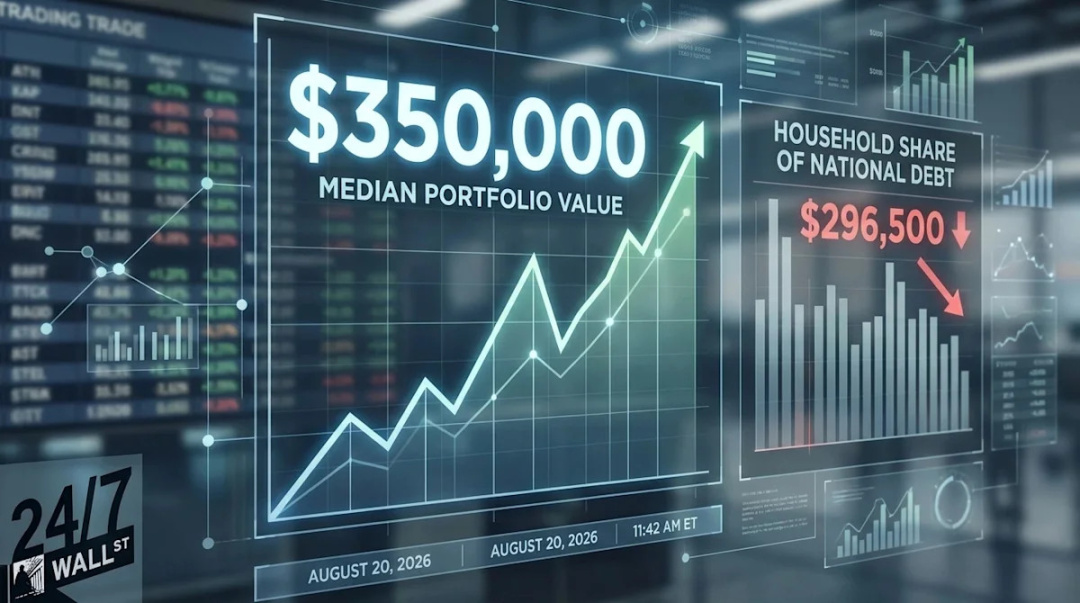
The median value of stock portfolios held by U.S. households has reached an unprecedented $350,000, according to recent Bloomberg data. This figure represents a remarkable increase of 75% since January 2026, with a jump of $150,000 in just the past seven months. Prior to this year, the median stock portfolio value had not significantly exceeded $150,000. The surge is attributed to strong equity market performance, particularly from the SPDR S&P 500 ETF Trust (SPY), which has seen a year-to-date increase of 12.78% and a 20.2% rise over the past year. However, this growth in stock wealth contrasts sharply with stagnant real wages, which have barely changed over the past year.
As of July 2026, real average hourly earnings stood at $11.30, virtually unchanged from $11.32 in July 2025. Additionally, the personal savings rate has declined to 2.8% in the second quarter of 2026, down from 5% a year earlier. This indicates that while asset prices have soared, income growth has not kept pace, leading to a reliance on capital gains rather than wage increases.
Despite the rising stock portfolio values, consumer sentiment has dipped to recessionary levels, with a reading of 49.5 in June 2026. The VIX, a measure of market volatility, remains within a normal range, suggesting that equity markets are currently stable. However, the household share of national debt has also escalated, reaching $296,500 as the U.S. national debt surpassed $40 trillion. This rapid increase in debt is concerning, especially as rising federal borrowing costs translate into higher rates for mortgages and credit.
The 10-year Treasury yield is currently at 4.71%, nearing its one-year high, while the average credit card APR stands at 20.94%. As the gap between perceived wealth from stock portfolios and actual cash flow widens, the financial landscape for many households appears precarious. If stock values were to decline, the burden of national debt would remain, highlighting the importance of prudent financial planning in uncertain economic times.