GM's Buyback Strategy Faces Competition from Ford's Earnings Growth
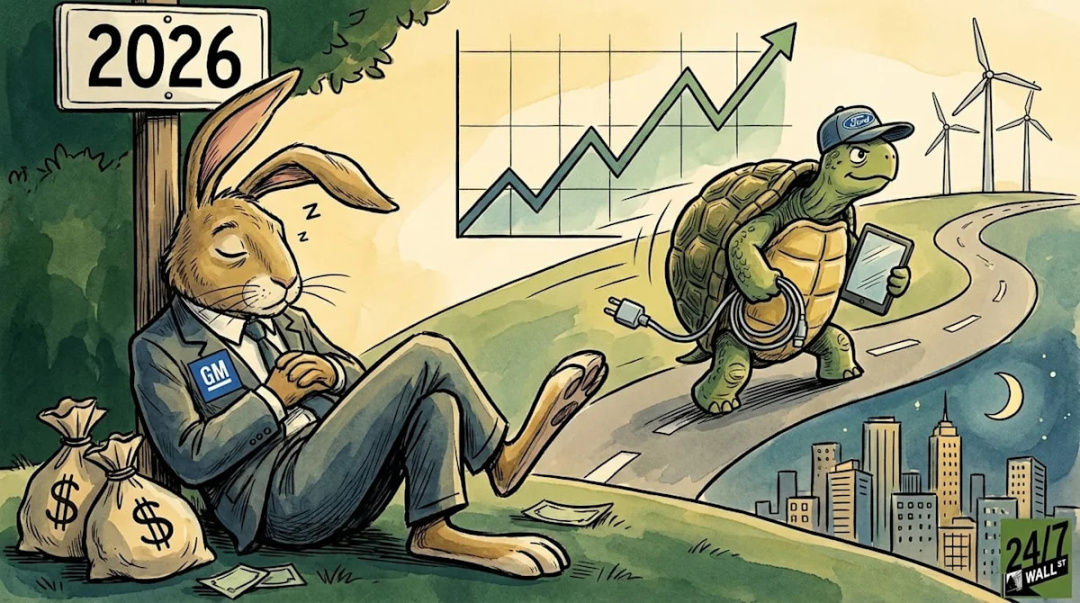
General Motors (GM) and Ford have recently updated their financial outlooks, with GM's aggressive buyback strategy facing challenges from Ford's strong earnings performance. After GM's board authorized a $6 billion buyback in June 2024, the company initially surged ahead of Ford. However, as of 2026, GM's stock has only increased by 3% year-to-date, while Ford has outperformed with a 13% gain, matching the SPDR S&P 500 ETF's 12% increase.
Despite GM's earlier success, its recent financial results have raised concerns. The company reported a 26% decline in GAAP earnings, attributed in part to $2.28 billion in strategic realignment charges related to electric vehicle initiatives. In contrast, Ford's earnings growth has been remarkable, with a year-over-year increase of 430%, driven by narrowing losses in its Model E division and a significant rise in paid subscriptions for Ford Pro.
Analysts have noted that GM's forward price-to-earnings ratio stands at 6x, while Ford's is slightly higher at 8x. Institutional ownership remains a critical factor, with GM at 90.5% compared to Ford's 68%, limiting GM's potential for attracting new investors. Despite these challenges, GM's management has raised its full-year EBIT-adjusted guidance to between $14 billion and $16 billion, indicating confidence in its long-term strategy.
As both companies navigate the evolving automotive landscape, the competition between GM and Ford highlights the importance of balancing buyback strategies with sustainable earnings growth. While GM has committed to returning capital to shareholders, Ford's recent performance suggests a more dynamic approach to market challenges. The ongoing rivalry between these two automotive giants will be closely watched as they adapt to changing market conditions and consumer preferences.