Greece's Intelligence Faces Deepfake Threat After Deceptive Video Call
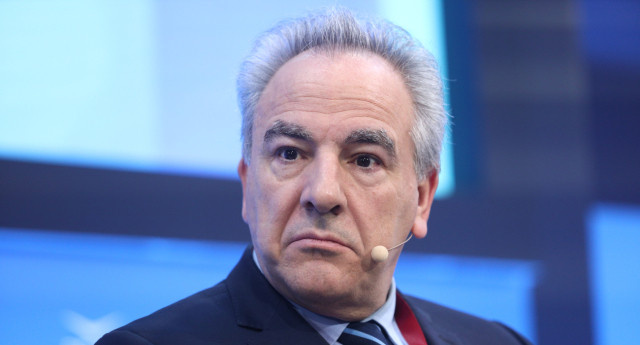
In a startling revelation, Thanos Dokos, Greece's Secretary General for National Security, recounted his experience with a sophisticated deepfake operation that misled him into thinking he was conversing with his Ukrainian counterpart. The video call, which appeared entirely authentic, took a suspicious turn when the individual persistently inquired about drone issues in Lefkada, prompting Dokos to verify the identity of his interlocutor. A subsequent call to the real Ukrainian official confirmed that the person he had spoken with was a digitally fabricated creation, raising significant concerns about the security of government communications.
Dokos described the operation as one of the most advanced deception tactics encountered by Greece's state apparatus. Prior to the video conference, documents had been exchanged that included official letterheads and personal details, making the encounter seem legitimate. He noted that the wording used during the conversation mirrored that of previous communications, further deepening the illusion of authenticity.
The incident has triggered a reassessment of Greece's security protocols for official communications. Dokos emphasized the need for heightened vigilance, stating, "From now on, even what we see with our own eyes cannot always be considered reliable." He also pointed out that this incident was not an isolated case, as similar operations had targeted officials in other countries, including a senior official from Estonia.
The implications of this deepfake operation extend beyond Greece, with officials expressing concerns about coordinated disinformation efforts linked to Russian activities in the Baltic region and beyond. Prime Minister Kyriakos Mitsotakis, who was informed of the incident, acknowledged the seriousness of the threat posed by deepfakes and the necessity for a robust regulatory framework to combat such technologies.
This incident aligns with previous warnings from government officials about the risks associated with artificial intelligence and its potential to distort reality. The Secretary General for Communication and Media, Giannis Mastrogeorgiou, has previously described AI as a significant challenge due to its capacity to generate convincing false audiovisual material that could influence public discourse and democratic processes.
In light of these developments, the Greek government is actively working to enhance the security of its communications systems against evolving hybrid threats. While officials have dismissed opposition criticism regarding the incident, they maintain that the seriousness of the situation is not being underestimated. The cyberattack did not result in any leak of classified information, but it has underscored the urgent need for improved defenses against advanced AI technologies that could undermine national security and democratic integrity.